Beyond the Estimate: CIC Explores Why Transparency Is Becoming Collision Repair's Most Valuable Service
Today's vehicles require extensive research, OEM repair procedures, calibrations, documentation, and increasingly complex conversations about insurance coverage. At the same time, consumers file collision claims so infrequently that most have little understanding of how the process works until they're suddenly forced to navigate it.
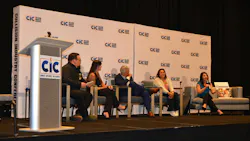
That disconnect was the focus of a panel discussion at the recent Collision Industry Conference (CIC) in the Chicago suburb of Schaumburg, Illinois, where repairers, industry leaders, and even a recent collision repair customer explored how trust and transparency are reshaping customer expectations. It was part of a larger Consumer Impacts theme for the conference.
Moving Beyond the Traditional Intake Model
According to panelists Maria Quintero, owner of Body Builders Automotive in Illinois, and Drew Plischke, director of client/insurance reconciliation of Gold Coast Auto Body, the foundation of that guidance begins long before any repairs begin. Instead of treating the initial meeting as an estimating appointment, both shops view it as a consultation.
“When consumers walk through my door, they're not leaving with an estimate, per se,” Quintero said. “They're leaving with resources to help them understand how the claim process is going to work within our shop and then how that's going to impact them.”
As vehicle repairs become increasingly tied to OEM procedures, certified repair requirements, and insurance coverage questions, the consultation serves as an opportunity to establish expectations from the beginning. Customers learn how repairs will be planned, how supplements are handled, what happens when coverage disputes arise, and what role they may need to play if disagreements occur between the shop's repair plan and the insurer's payment position.
For repairers, that proactive approach eliminates surprises later in the process. For consumers, it creates confidence.
The Value of a Team Approach
Those who have attended CIC in recent years are aware of what is typically an empty chair on the stage to represent the consumer. At this CIC, consumer panelist Roxanne Raffaelli shared her recent collision repair experience.
After filing her first insurance claim in nearly two decades, Raffaelli said she entered the process feeling overwhelmed and uncertain, but Body Builders Automotive put her at ease by letting her know, “Our team will be working on your case,” she said.
“When you have a car accident, that’s an upsetting day. So, you’re looking for relief from someone. And I immediately felt relief when I reached out to Body Builders,” Raffaelli said.
Quintero said all staff understand the process a consumer must go through from when they walk through the door until they pick up the completed vehicle.
“When we say we work as a team, it takes all of us to do it, and not just the people that they see on the front lines but also the technicians and everybody who works in the back,” Quintero said.
Transparency Builds Trust
The discussion repeatedly returned to one central theme: transparency.
When insurance companies decline to pay for certain repair operations or parts, many repairers hesitate to involve customers too deeply, fearing technical discussions will create confusion. But the panelists advocated the opposite approach.
Quintero and Plischke said customers are included in virtually every major communication. Supporting documents, repair plans, insurer responses, and advocacy efforts are routinely shared with vehicle owners so they understand exactly what is occurring.
Plischke described the process using three simple words: educate, advocate, and empower.
The goal is not to overwhelm consumers but to help them understand the difference between a repair plan designed to restore a vehicle safely and an insurer's payment decision.
“The best way to describe what we're doing is it's simply advocating, educating, and empowering the consumer, because this is not our claim; it's their claim,” Plischke said. “We are in position to safely and properly repair their automobile for them, and they are entrusting us to do so.”
That transparency proved influential for Raffaelli with Quintero’s shop, who described receiving regular updates and having visibility into communications between the repairer and insurer.
“They communicated with me every other day on the status of where they were with the repairs. That was wonderfully helpful and really gave me a lot of relief during that anxious time. They were transparent about, 'Here's what the insurance company is saying, here's what they're going to pay, here's what they're going to deny.”
The Industry Knowledge Gap
Raffaelli admitted she did not understand the difference between OEM and aftermarket parts before her accident, or that an insurance policy rider endorsing OEM parts was available. Although there was a small difference in the hourly labor rate of the shop and the prevailing rate for the area, the insurer's estimate figured using alternative parts made up the bulk of the $3,000 difference she paid after paying the deductible.
Panel moderator Erin Killcoyne-Solis, Square One Systems senior vice president, noted that repair professionals hear these terms so frequently they often assume customers understand them as well. She was joined by fellow panel moderator Danny Gredinberg of The Database Enhancement Gateway and Collision Advice.
The conversation served as a reminder that education remains one of the industry's greatest opportunities.
Why Consumer Participation Matters
The panel also challenged the notion that repair shops alone should resolve insurance disputes.
While repairers can provide documentation, repair plans, and technical justification, ultimately the policy and the vehicle belong to the customer.
As Quintero explained, consumers often possess the strongest voice in discussions about claim payments because they are the party the insurer is obligated to indemnify.
That can create uncomfortable conversations, particularly with customers who simply want to drop off their vehicle and avoid being involved in emails and phone calls to demand reimbursement from their insurer.
Still, the panelists agreed that even the most hands-off customers benefit from receiving documentation and resources throughout the process. Whether they choose to act immediately or later seek reimbursement, they possess the information necessary to advocate for themselves.
“If you want to know the most powerful piece of equipment or tool that you have inside your shop, it's the customer,” Plischke said. “And once they understand that money's their money and not the shop's money, their choice changes to be hands-on.”
About the Author
 Jay Sicht
Jay Sicht
Editor-in-Chief, FenderBender and ABRN
Jay Sicht is editor-in-chief of FenderBender and ABRN. He has worked in the automotive aftermarket for more than 30 years, including in a number of sales and technical support roles in paint/parts distribution and service/repair. He has a bachelor's degree in journalism from the University of Central Missouri with a minor in aviation, and as a writer and editor, he has covered all segments of the automotive aftermarket for more than 22 of those years, including formerly serving as editor-in-chief of Motor Age and Aftermarket Business World. Connect with him on LinkedIn.
Don't miss Jay's next article or podcast. Sign up for FenderBender Today's Collision Repair News and ABRN eNews here.