MSOs Share Strategies for Revenue Opportunities and Growth
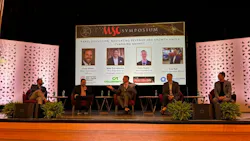
MSO leaders shared their strategies and insights into how they’re standing out from the competition and finding revenue opportunities in the current market at the MSO Symposium on Nov. 2 in Las Vegas.
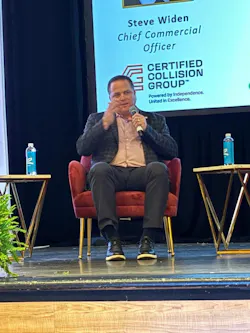
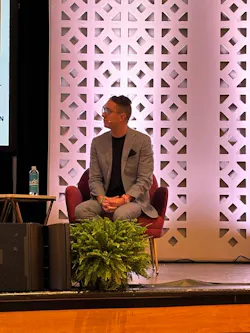
Dan Risley, vice president of Quality Repair and Market Development at CCC Intelligent Solutions, moderated the panel, which featured Certified Collision Group Chief Commercial Officer Steve Widen, Puget Collision Vice President of Strategic Accounts Gary Hogan, CollisionRight Senior Vice President Mike DeFrancesco, and Quality Collision Group Chief Experience Officer Troy Hall.
When asked about untapped revenue oppurtunities for MSOs, DeFrancesco and Widen said fleet work. Widen also said shops should look into commercial heavy-duty truck work. In addition to customer pay, Hogan said financing options help customers navigate tricky financial situations.
“I figure 50% of customers out there, they can't afford a $500 hit or greater,” Hogan said. “So, the financing options that we've been pushing is making a difference.”
DeFrancesco said shops are missing additional repair opportunities they can address after an accident, and noted the most aware that a customer will be of the condition of their vehicle is right after they get into an accident.
“I think there’s an opportunity to engage them in a conversation where I think, in some cases, we want to shy away from it because we don't want to bring the conversation to light,” he said. “If there is damage there that's not related, we'd rather just kind of write it up and move on. I think that a lot of customers will engage with us to have these vehicles repaired fully if they already have it in shop.”
To help attract customers directly, Hall explained how QCG has been targeting the micro-influencers of groups. DeFrancesco said they do something similar, tapping into the resources that a customer reaches out to first, whether it’s an agency or dealership where they got the vehicle.
“I’m a car guy. Everybody in my circle, my family, friends, reach out to me first,” Hall said. “So, part of our strategy has been targeting those micro-influencers so that when consumers get into an accident, they reach out to that resource for a recommendation.”
Rising total loss frequency also presents an opportunity to win a customer over in the future. DeFrancesco said when a customer gets in an accident that, even though no shop wants to deal with a total loss, providing a high-quality experience during a difficult time could mean that a customer calls your shop first in the future. Risley asked the panelists where AI is helping generate new revenue or efficiency. Hall said most large shops are using it to capture business after hours when no agent is available to take the call.
“Most accidents happen outside of business hours,” he said. “Our agents are set up to schedule the customers, so self-service on the customer side is the biggest piece. Obviously, that's tied in with our management system and then gives them options.”
Hogan said they use photo estimating for every job.
“It definitely takes a little bit of that administrative burden off our team members to be able to get the ball rolling for the vehicle disassembly to essentially get a full repair plan as close to one single sheet as possible,” he said.
The panelists were asked about how OEM relationships and certifications help generate revenue and influence customers beyond just having a plaque on the wall.
Widen said luxury brands and EVs push customers to bring their vehicles to the OEM’s certified network, which requires the shop to have the right training and equipment.
“That OE is actually providing the ROI, not just on a shop locator standpoint,” he said.
Hogan added that OEMs are helping by having more definitive language in their position statements. Removing ambiguity removes follow-up questions and reduces friction.
“This is how you repair the vehicle, and everybody can agree to it,” he said. “It puts the customer in the right spot and insurance partners are confident that the vehicle is getting put back to the road safely.”
DeFrancesco said CollisionRight customers do seek out OEM-certified shops.
“I think people are educated based off social media and they take the time to research and see what's available to them, which also has their what shops have their certification too,” he said. “Within our network, we have over 4,600 OEM certifications in our group -- which we're really proud of -- and so we want our collision centers to continue to get OEM-certified.”
Hall added that QCG builds OEM certifications into its core marketing strategy with an emphasis on customer education. DeFrancesco said it's easy for customers to find OEM certified shops with a simple ChatGPT query.
“So, we hold sessions at the shops, with local car clubs. Things like that, hundreds of people where we educate them through the entire repair process,” Hall said. “We see the fruits of that labor in referrals, see it from the dealers locally for those clubs that we host those events for.”
The panelists believe that OEM certifications will provide a competitive advantage over the next five years but Widen added a caveat to that statement.
“If the OEMs actually hold everybody accountable for the training and equipment needs, they will actually drive the vehicle there, push the vehicle there, then absolutely 100%,” he said.
Risley asked the panelists where, if claims count remains flat or declines over the next five years, will future revenue growth come from? Hogan said it will come down to more in-known capabilities. During COVID-19, his shops didn’t have the capacity to take care of all the customers and decisions for what operations to send outside your facility were made based on cycle time effects. Today, it is the opposite.
“Now, we have the capacity, so it's really digesting what it is that we can take on in-house, whether it be mechanical or ADAS-related components or glass, and maximizing those opportunities,” he explained. “I think from an MSO perspective, a lot of the MSOs in this room have already taken on that next step of like, hey, we're going to do the ADAS [calibration]. Certainly not all, but I think the large majority have.”
Risley followed up by asking the panelists what will separate the fastest growing organizations from everybody else. DeFrancesco emphasized the importance of looking at DRP performance and maintaining those relationships at a local level. CollisionRight’s operations team works with their partners to capitalize on performance scoring. Widen said his team works with insurance programs’ performance management teams to ensure KPIs are maximized as well, and Hogan reinforced the point.
“I mean, that's why everybody in this room does what we do – making sure the vehicle gets put on the road safely for the consumers is the number- one priority,” Hogan said. “[But] I'd say as far as being able to maximize and who's going to prevail is going to be those that are performing. So again, with the transparency of the scorecarding and you know exactly where you sit on any given week, it's going to be a matter of making sure that you're being a top performer.”
DeFrancesco said communication with insurance partners and customers will be important for a shop or MSO to seperate themselves from competition. Hall reinforced the importance of focusing on customer experience beyond how the vehicle was repaired, including how the customer experiences your brand, including your location, online presence, social media, and communication during the repair and post-repair. Key KPIs for shops to measure marketing effectiveness include customer sentiment, net promoter score, Google review, referrals, and sales.
“Everybody in this room should go back to their companies next week and audit your customer journey,” Hall said. “Find where gaps are, fill those, and that rolls up basically to your brain presence in the consumer.”
About the Author
 Peter Spotts
Associate Editor
Peter Spotts is the associate editor of FenderBender and ABRN. He brings six years of experience working in the newspaper industry and four years editing in Tech. He has a bachelor's degree in journalism from Western New England University with a minor in integrated marketing communications and an MBA. A sci-fi/fantasy fan, his current 2010 Honda Civic is nicknamed Eskel, after the character from the Witcher book series, for the scratch marks on its hood.
Don't miss Peter's next article. Sign up for FenderBender Today's Collision Repair News here.