Vehicle technology is exploding today and over the next 2 to 3 years, it will change how a shop has to do business in terms of staffing, education and establishing its labor rates.
According to the American Automobile Association (AAA), vehicles equipped with advanced driver assistance systems (ADAS) such as automatic emergency braking, blind spot monitoring and lane departure warning, can cost twice as much to repair following a collision.
Even minor incidents can cause damage to expensive sensors found behind windshields, bumpers and door mirrors. Removal and replacement (or repair) combined with the cost of calibration could easily add up to $3,000 in extra repair costs, AA reports.
With one-in-three Americans unable to afford an unexpected repair bill of just $500, AAA strongly urges consumers to perform an insurance policy review and consider the potential repair costs of these advanced systems if in an accident.
For the vehicles in AAA’s study, the repair bill for a minor front or rear collision on a car with ADAS can run as high as $5,300, almost two and half times the repair cost for a vehicle without these systems.
With that being understood, where does the average shop fit into all this in terms of how to charge for these repairs when a sensor fails and it has to be replaced and recalibrated during basic maintenance intervals?

|
From space to targets, system names to repair diagnostic processes, this new webinar will help your whole shop service ADAS-equipped vehicles.. |

|
|
About the Author
 Bob Greenwood
Robert (Bob) Greenwood, AMAM (Accredited Master Automotive Manager) was the President and C.E.O. of Automotive Aftermarket E-Learning Centre Ltd. (AAEC). AAEC is a company focused on providing Business Management Resources and Development for the Independent Sector of the aftermarket industry utilizing the Internet environment. AAEC content and technology is recognized as part of the curriculum of the Fixed Operations Diploma and the Aftermarket Degree courses taken at the Automotive Business School of Canada in Georgian College located in Barrie, Ontario, Canada. This school is the leader and only college in Canada that offers an automotive business education. AAEC is also recognized by the Automotive Management Institute (AMI), located in Colleyville, Texas USA, allowing 80 credits for successful completion of the AAEC E-Learning portion of the site towards the 120 credits required to obtain the reputable Accredited Automotive Manager (AAM) designation. The Automotive Management Institute’s Accredited Automotive Manager designation is the first business management accreditation exclusively for the automotive service professional. To date, AMI various programs have attracted more than 212,000 enrolments throughout North America.
Greenwood died on Sept. 9 in Surrey, British Columbia, Canada, from a heart attack. He was a regular contributor to Motor Age magazine and will be greatly missed. See some of his recent work here:
Where is your shop today: Do you have a career or job culture?
Part one of a three-part series looks at a sample policy manual for your team
How should you measure the real cost of running your business?
A few quick calculations can provide powerful insights into business productivity and profitability.
Shop of the future is becoming reality
Thousands of independent shops will disappear over the next few years, but those that survive will be great businesses. Let's look at what these shops will have done to remain successful.
See more of his articles below.
Related
 Intelligent Car
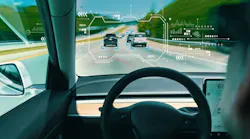 Autonomous car, ADAS