Beyond Collision Repair: Finding New Revenue Streams Amid Falling Claims
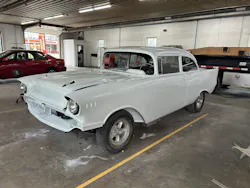
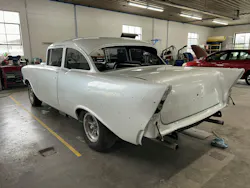
When a classic Mustang recently rolled into Mark Probst's shop, it wasn't there because of a fender-bender. The owner didn't need insurance paperwork processed or a repair plan written. He needed help getting unstuck.
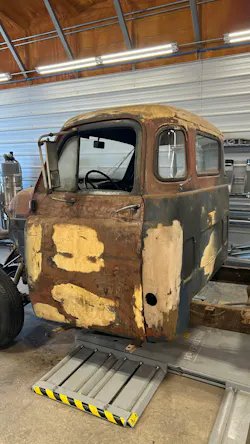
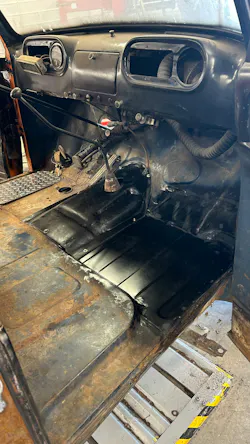
The decades-old restoration project had hit a wall. It required floor pan and firewall repairs, and Probst knew exactly what he was willing to take on. Nothing more, nothing less.
"We're welding some patches in, some floor pans and some firewall patches. And that's it," says Probst, owner of Probst Auto Body, near Effingham, Illinois. "That's all I promise."
That deliberate approach reflects a reality collision repair shop owners across the country are confronting in 2026. Claim counts remain down in many markets, and while no one knows exactly where the industry is headed, operators are increasingly asking the same question:
What happens if this isn't temporary?
For Probst and Jason Mundy, owner of Mundy’s Collision in Lawrenceville, Georgia, the answer isn't sitting around waiting for vehicles to arrive. Instead, both have expanded well beyond traditional collision repair, building alternative revenue streams that keep employees productive and create opportunities regardless of what happens to claim volume.
Their approaches look very different. Probst has returned to restoration projects, added glass services and expanded ceramic coating offerings. Mundy has built a portfolio that includes calibrations, fabrication, restoration, truck customization, dealership work, mechanical services, and even painting aircraft components.
The common thread for both, though, is a willingness to adapt.
I think if we wait too long, I don't think you're going to survive this. I think we have to adapt. Mark Probst, owner, Probst Auto Body
Facing an Uncertain Future
For many collision repairers, the challenge isn't simply that work is down. It's that no one seems to know where the bottom is.
"We're all like, where's the stop at?" Probst says. "What's our new normal? That's what I always keep saying, ‘Is this the new normal?’ I don't know."
After more than two decades in the industry, Probst says the current environment is unlike anything he has experienced.
"For years, I always thought I could project,” he says. “I looked at growth, and I staffed for growth," he says. "It's probably the biggest questionable time I've ever had in the industry because I've never seen anything like this in 20-some years."
That uncertainty forced him to challenge long-held assumptions about how his business operates.
"It reminds me of Blockbuster when streaming was becoming a thing," he says. "How serious is this? Is now the time to adapt? I think if we wait too long, I don't think you're going to survive this. I think we have to adapt."
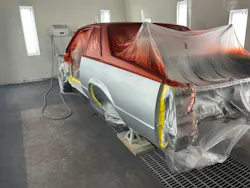
Mundy sees many of the same pressures, though he believes some recovery will eventually come.
"I think we're all kind of spoiled after COVID. Every business kind of ramped up during that period,” Mundy says. "Overall today, I would say the industry is 20 to 30 percent down."
While he expects some rebound as economic conditions improve, he doesn't necessarily expect a return to the boom years.
"I don't see it getting back to post-COVID times," he says.
For shop owners, that should be enough reason to start exploring alternatives.
Returning to His Roots
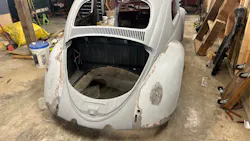
Long before collision repair became Probst's primary business, his first love was classic cars.
"The old cars are what brought me into the industry," he says.
Years ago, Probst's shops regularly took on restoration projects. But as collision volume increased, balancing the two businesses became increasingly difficult.
"You take on a big project and the next thing you know your collision side explodes and you're busy with collision work," he says. "As much as I love the old cars, it didn't mix great."
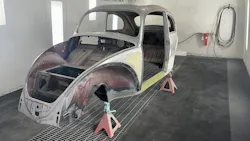
Eventually, he stopped taking restoration work altogether. In the face of declining sales and technicians running out of work, though, Probst started reintroducing restoration projects this past May.
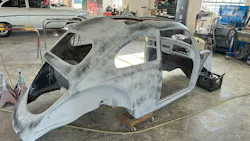
Taking what he learned from last time, Probst changed how his shop handles these projects. Rather than accepting year-long rebuilds, he's targeting smaller jobs with clearly defined scopes.
"Let us help you get unstuck on your project," became the message.
The formula is simple. A hobbyist who's stalled on welding repairs, bodywork, fabrication or another specific task can hire the shop to complete that portion before taking the vehicle back.
Since making the shift, Probst says the shop has completed roughly half a dozen projects.
"I'm trying to be picky and choosy," he says. "I'm not trying to get something I'm married to for six months or a year."
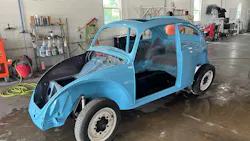
The strategy allows his team to generate labor revenue while preserving capacity for collision work.
For the Mustang project, for example, Probst estimates roughly 40 labor hours split over a few weeks.
"My collision side doesn't miss a lick," he says.
That's the balancing act he believes more shops need to master.
"I think you're going to have to find your balance," he says.
Diversification at Scale
While Probst returned to a familiar niche, Mundy pursued diversification on a much larger scale. Over the last several years, his company has steadily expanded in a variety of directions.
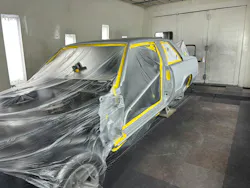
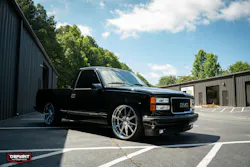
The business built a standalone calibration center. It acquired Defiant Motorsports, a performance and restoration shop. It purchased an additional collision repair facility. It continues adding services across multiple operations.
The Defiant acquisition, in particular, introduced an entirely new business model.
“Collision repair relies heavily on estimating systems and book times,” Mundy says. “Restoration and fabrication projects are billed based on actual touch time.”
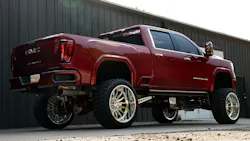
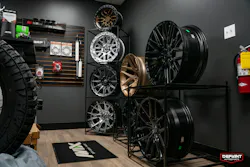
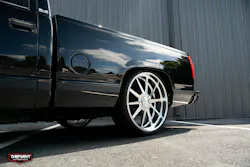
It took some getting used to, Mundy says, since it’s a completely different business. Once the team got used to the workflow, though, the acquisition created opportunities that extended beyond restoration work itself. The operation now handles fabrication, custom vehicle builds, lift kits, truck accessories, wheels, tires, lighting, and more.
A recently completed custom truck project generated roughly $48,000 in revenue through a combination of parts, fabrication, painting and installation work.
Those projects help diversify revenue while maximizing the capabilities already found inside a collision repair business.
Looking Beyond Traditional Markets
Some of Mundy's most successful diversification efforts weren't planned at all but instead came about organically through conversations. By building relationships with customers and local businesses, Mundy's team uncovered opportunities many collision shops would never think to pursue.
For example, his shop is near a small airport. Over time, a relationship with a local aircraft mechanic led to painting work on aircraft components.
"We've painted airplane parts because we're near an airport," Mundy says. "You've got to get out and just meet people.”
The jobs aren't enormous, but they provide profitable work during slower periods. In addition to the aircraft jobs, his shops have cultivated work from dealerships, fleet operators and specialty customers.
The dealership relationships, in particular, have become a valuable revenue stream.
Mundy's collision operation is certified for GM, Volvo, and Porsche repairs. Those partnerships generate traditional collision work while also opening doors for aftermarket customization projects.
"We do a lot of blackout kits and any kind of upfitting on trucks or cars," Mundy says.
The work helps dealerships differentiate vehicles while creating an additional source of business for the shop.
Fleet work has proven equally effective. Plumbing companies, HVAC contractors, landscapers, and electrical firms all operate vehicle fleets that occasionally require repairs. Many prefer paying out of pocket rather than filing insurance claims.
"Most of these guys just want their car right back on the road," Mundy says.
Without insurance approval delays, repairs can move quickly through the shop.
You can't just sit in your shop and wait for people to walk in. You've got to really go out and sell yourself and sell your business. Jason Mundy, owner of Mundy's Collision Repair and Defiant Motorsports
Start With What You’re Good At
Neither owner believes there is a single formula for diversification. Instead, both recommend looking at existing strengths, interests, and market opportunities.
For Probst, that meant classic cars. For Mundy, it meant building on expertise already present within the organization.
Not every shop needs a restoration division or fabrication department. Probst has added glass replacement services and ceramic coatings. In past years, he generated meaningful revenue through spray-in bedliners and tire services.
Though unconventional, the service leverages equipment and expertise the shop already possesses. Mundy encourages operators to think similarly.
"If you don't ask, you'll never know," he says.
Conversations with dealership managers, business owners, local organizations and customers often reveal needs that shops can already fulfill. The key, Mundy says, is staying engaged.
"You can't just sit in your shop and wait for people to walk in," he says. "You've got to really go out and sell yourself and sell your business."
More Than Revenue
While alternative services often get discussed as revenue generators, Probst measures success differently. His biggest concern isn't restoration sales totals. It's making sure his employees have work.
For years, he staffed aggressively to support anticipated growth. When collision volume declined instead, the business suddenly found itself overstaffed.
"I had always planned for growth," he says. "I always had extra people in the bullpen."
When sales fell, that strategy became expensive.
"The shop was bleeding cash," Probst says. "I got into the reserves multiple times."
He faced a difficult choice: increase revenue or reduce staffing. His answer was to find work.
"My first plan was increased revenue. Let's take on projects. Let's see if we can keep the guys busy."
Today, restoration work helps accomplish exactly that.
"The guys aren't running out of work," he says. "I'm not dipping into reserves to pay my technicians."
For Probst, keeping employees productive carries benefits beyond the financial statement.
"I don't like to send my guys home not paid," he says. "As a business owner, I think it's my responsibility to make sure they have a paycheck."
Seeing technicians sit idle was painful.
"It hurt," he says. "Financially, it hurts in a big way."
The restoration projects help bridge those gaps while creating additional profit opportunities.
"At least we've got a paycheck coming in," he says. "We're paying our light bill, we're paying our insurance bill, we're still clicking away."
A Critical Moment
Neither owner claims to have all the answers. In fact, both acknowledge the uncertainty surrounding the industry's future.
Probst openly admits that the hardest part is not knowing where the market ultimately settles.
"When are things going to flatten out?" he asks. "When can I say this is my new normal?"
Until that answer arrives, he refuses to stand still.
"We can't just sit here," he says. "You can moan and cry that there is no work out here, or you can get off your ass and get out there and do something."
Mundy shares that same philosophy.
"Don't take your foot off the gas right now," he says. "It's a tough season for everyone."
For collision repair operators navigating shrinking claim counts, that may be the most important lesson. Diversification isn't necessarily about abandoning collision repair. It's about protecting the business while positioning it for whatever comes next.
Whether that's restoring classic Mustangs, installing lift kits, servicing fleet vehicles, replacing windshields, applying ceramic coatings, painting aircraft parts, or helping dealerships customize inventory, the opportunities are often closer than owners realize.
The shops that thrive won’t be the ones waiting for the industry to return to yesterday's conditions. They’ll be the ones building tomorrow's business today.
"As much as I hope the collision side comes back around," Probst says, "you've got to do something. You can't just sit and wait."
About the Author
 Noah Brown
Noah Brown
Noah Brown is a freelance writer and former senior digital editor for 10 Missions Media, where he facilitated multimedia production several of the company's publications.