The Economy is not the Boogeyman in Your Closet
Lions And Tigers And Bears, Oh My!
Today I will let you decide if we are in a recession, examine where we currently stand on your recession plan and decide what we are going to do about it. I received a great e-mail from a shop owner upset that one of our earlier articles might be blaming you guys for the recession. Although I do not feel that way, perception is reality, so I want to certainly apologize if any of you felt the same way before we get started.When you coach 847 shop owners every week in North America, you get a great feel for what is really happening in the trenches. Many of my coaches were shop owners in their previous lives, and they understand how hard the automotive service business can be at times. They also understand that most of the time the difference between success and failure in a recession can be simple confidence. Staying confident and positive is what the people you lead need to see and hear. Let's read a conversation from Coach George Zeeks to one of his shop owners, it may just help you!
Please remember back to when you were 6 years old, when the world was filled with fun and discovery, when your dog was your bestest friend and the boogieman lived in your closet. On some nights, when the rain fell and the thunder shook the house, you could swear that the closet door was coming open. Not all of us had an evil spirit in the closet; sometimes it was under the bed and sometimes in the basement. We know now, as adults, that there never was anything in the closet or under the bed, but it seemed awful real then. When something seems that real, then the effect it has on us becomes real. The economy we find ourselves in is filled with rain, thunder and lightning; they are very real. The question is whether or not the recession boogieman is coming out of the closet to get us while we are in our beds with the covers up to our nose shaking from fear.
A recession as defined by Webster's Dictionary as "technically defined as at least two consecutive quarters when the economy shrinks or fails to grow." Well then, I guess we find ourselves in a recession. The next step is to throw off the covers, drag this thing out of the closet into the light of day and examine just how bad things really are.
I coach shops all around the country and find that most shops fall into two different categories. One group is shops that are doing well despite the "recession," and many are even prospering. The other group contains shops that were doing poorly before the "recession" and continue to do the same but worse, sometimes much worse. A period of extended growth in the marketplace, especially inflated growth, is followed by a period of adjustment.
Some of the owners reading this may not survive this adjustment unless you take a hard look at what you do and what you need to change. The shops that fail will create a windfall for the shops that survive. Technicians, managers and, most importantly, customers will be left looking for a new shop to go to. Good employees and good customers are always hard to find; let's see what we can do to make sure that they did not belong to you.
The first step is to take a long hard look in the mirror. The owner is the role model of the shop, and if you are worried, then everyone will be scared. Fear is false evidence appearing real. You must always lead with an air of confidence, knowing that it will be A-OK. It spreads like the flu, until everyone in the shop is infected with fear or enthusiasm. You make the choice. If you are afraid, then cry in the shower but win the Academy Award while you are at work.
This is not a transactional business that we are in; people make their decisions based on emotions. People buy from people they like. If you are confident, then your staff and your customers will share that with you; people will purchase what you offer and come back. In times like these, the aftermarket repair industry is supposed to be doing better. People are afraid to buy new cars and are keeping their cars longer, so they need to take care of the maintenance on the car to keep it running.
My question to you is, why do some shops do a great job on maintenance and some not so much? It is because they ask. The expectation in the shop should be to find the things that the car needs and let the customer know what is wrong with their car. If your shop is not doing this basic task, then you will drop to the bottom of the food chain and you know what happens there.
A key step is to examine how we check out the customer's car. Many clients I speak with need to be reminded of the basic services that we provide. Take a look at your oil changes: Are we doing a tire rotation on 50 percent of those oil changes? Statistically, we should be. When we rotate the tires, are we taking the worst tire and checking the tire balance? How many battery services are we doing? Are we even checking? These items are labor intensive but are at a lower skill level and should be at a lower labor cost to us, which should result in more profit.
I was taught long ago that when things got tough, it was time to sharpen the pencil. What are you doing different to make your shop stand out from the crowd? The same old stuff that didn't work before will not work now. How do we treat our customers, how does our business look to a new customer and what image does our sales staff project to our customers? When we answer the phone, do we make people want to come in to us or to make yet another phone call to "check prices?" The phone, the initial greeting and the follow-through as the customer leaves cannot be the same old thing if you want them to come back.
Take a hard, objective look at your shop and ask yourself if you would come back. Have a friend or neighbor do a "mystery shop" and check the results. I would often have my wife do a visit to a shop I was running, and the results were often disturbing. She would often complain about the appearance of the customer area or the bathroom, something I took great pride in, and it always gave some new insight on the gap between the customer's expectations and mine.
Look at how long it takes to perform the services you provide and what the customer's expectation is. It does not matter what we think is an OK length of time. The only thing that matters is what the customer thinks. Do you have the proper systems in place to ensure we keep the customer informed on what is going on? Every time the customer has to call you to check the status of the car, you have failed.
My father was a highly decorated veteran of two wars, and one of the things he said to me, long ago, has stuck ever since. "When in doubt, do something, do anything, maybe even the wrong thing, but do it with great enthusiasm." Throw the covers off and go boldly to open that closet door. You need to be the one to lead your crew to a better future. The alternative is to stay in bed, under the covers, and I promise you that the boogieman will not have to come out to do anything bad. You are already doing it to yourself.
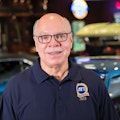
Chris "Chubby" Frederick is CEO and president of the Automotive Training Institute. He is thankful for assistance from George Zeeks, Brian Canning and Bryan Stasch in preparing this monthly column. Contact Chubby at [email protected].
About the Author
Chris (Chubby) Frederick
Chris “Chubby” Frederick is the CEO and founder of the Automotive Training Institute. ATI’s 130 full-time associates train and coach more than 1,500 shop owners every week across North America to drive profits and dreams home to their families. Our full-time coaches have helped our members earn over 1 billion dollars in a return on their coaching investment since ATI was founded.