Every shop owner wants more cars, more revenue, and less chaos. For years I believed the answer was simple: say "yes" to every repair that came through the door. The more work we accepted, the more money we would make. I eventually learned the opposite was true.
The biggest improvements in our business didn't come from buying more equipment or hiring more people. They came from becoming disciplined enough to decide what work fit our business and what work didn't.
After a major hailstorm, customers were lined up with insurance checks in hand. It would have been easy to fill the parking lot. Instead, we passed on many of those repairs because we knew what came with them: rental delays, supplement negotiations, long cycle times and frustrated customers. That decision opened capacity for the work we do best — minor collision repairs and fleet work — and ultimately created a healthier, more profitable operation.
That experience led us to build a simple decision-making system that now drives nearly everything we do.
Not every repair is a good repair. Sometimes the most profitable decision is saying no.
1. Stop Asking "Can We Repair It?"
Start asking, “Should we repair it?” Every job goes through the same filter:
• Is this the type of repair we typically perform?
• Does it fit our technicians' strengths?
• How much time, money and emotional energy will this cost?
• Will it create a bottleneck?
Not every repair is a good repair. Sometimes the most profitable decision is saying no.
2. Build a Customer Qualification System
Our website gives customers three ways to contact us: Call, text, or complete a form. As soon as a lead comes in, we call and ask one question: "What are you trying to do?" That question uncovers the customer's real objective and quickly tells us whether we're the right shop to help.
3. Give Your Team One Target
We built a live production dashboard in Google Sheets and display it on a monitor in the shop. It tracks drop-offs, blueprinting, parts status, production, and deliveries. Think of it like a restaurant kitchen display; everyone knows the next priority without having to ask.
Every "yes" has a cost. The shops that continue to grow are the ones that know which opportunities deserve a "yes" and which deserve a respectful "no."
4. Communicate the Way Your Team Learns
I like bullet points. Many people in operations need context before they can confidently make decisions. Once I stopped communicating the way I preferred and started communicating the way my team processed information, execution improved dramatically.
5. Protect the System
Recently, we declined a heavily damaged Ford Super Duty because we knew it didn't fit our process. Years ago, we would have taken it. Today we protect our focus. Consistency comes from having a weekly planning system that keeps priorities visible, projects delegated, and routines reviewed.
Final Thoughts
Growth isn't about taking every opportunity. It's about building a business that knows exactly what it does well and having the discipline to protect it. Every "yes" has a cost. The shops that continue to grow are the ones that know which opportunities deserve a "yes" and which deserve a respectful "no."
About the Author
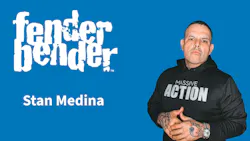
 Stan Medina
Stan Medina
Stan Medina is CEO of Certified Collision Works, LLC, in Corpus Christi, Texas. As founder of Certified Elite and through his YouTube channel Collisionpreneur, he shares the systems, playbooks, and strategies that transformed his shop so others can scale past $1M in annual sales with confidence.