Consistency and Documentation Keys to Payment for Destructive Weld Testing
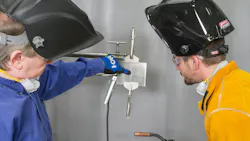
Destructive weld testing is a vital practice to ensure the safety of the customer. However, many shops encounter challenges with compensation for the work, leading to the practice not being a consistent industry standard.
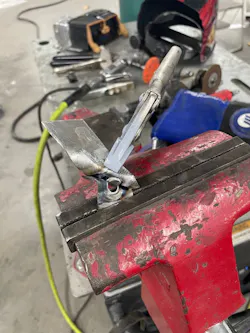
Test welds are necessary for technicians to know if the weld they’re performing will deliver a safe, quality repair. The best way to achieve this is by performing a test weld on a piece of scrap from the vehicle being repaired and confirming the metal tears before the test weld fails, according to I-CAR Welding Instructor Dave Brinkley. Test welds also enable the technician to adjust and confirm the welder settings, so they don’t need to be adjusted while in the middle of the repair.
“Any shop that isn't doing it every time...they need to be doing [destructive weld tests],” says Tim Paap, owner of Paap Auto Body in Mattoon, Illinois. “Regardless of whether they end up getting paid by the insurance company or the customer, they need to be doing it.”
A 2026 “Who Pays for What” survey, conducted by CRASH Network and Collision Advice, found that only one in four shops that regularly list destructive weld tests on their estimates are actually paid for it by the insurer, which is down 15% from last year. The shops that said they “never” get paid went up 15% to 44%. Kris Burton, owner/operator of Rosslyn Auto Body in Alexandria, Virginia, says their payment success rate is about 50-50. The biggest challenge he encounters is a lack of knowledge about the topic.
“There’s a lack of education on the insurance company side and they’re not trained. They think they’re experts and can dictate price,” he says. “We’re dealing with a lot of people who don’t know what it takes to fix these vehicles.”
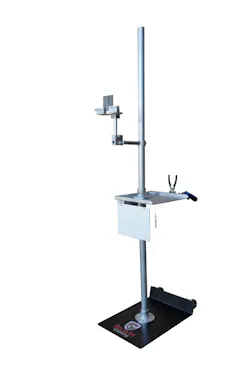
The path to payment starts with consistency, Burton says. Rosslyn Auto Body has a dedicated welding station, and technicians perform the work for each job in accordance with OEM procedure requirements.
“If you’re struggling to get paid, consistency is our biggest thing. Shop setup- have a station, do you have the equipment? When the adjuster comes, they can see it or virtually send a photo immediately,” Burton says. “We have our own station, and we do it the same way every time...Techs know how to do it. Our shop is very specialized, so there are only a few people who do welding here.”
Paap, says the documentation, including video, is the key for his shop to get paid for the work it performs. His shop uses Collision Clarity, an AI-powered platform that connects shops, insurance companies, and OEMs. It helps technicians document every step and provides linked evidence supporting the work.
“[Insurers] just say, well, we don't have proof of that or that's included [in another labor operation],” Paap says. “We can show them videos, images, documentation, and they can search through all 283 or 300 pages of documentation...If [they] don't want to pay for it, it's between [them] and the customer, but all the documentation is in there.”
Getting paid any amount isn’t the end of the battle. Burton frequently encounters issues with being paid fairly for the time performing the work takes versus what the insurer pays for various labor operations.
“It’s a lot of work. Even when we do get paid, I don’t think it’s enough to cover what it really costs,” he says. “[For example], If we ask for corrosion protection or pre-wash, post-wash. They’ll say we don’t pay for that…They’ll give us 0.2. That doesn’t cover the hour that we asked for. Washing a car two to three times takes more than an hour.”
A positive note from the “Who Pays for What” Survey is that a record low of 31% of shops said they never listed destructive weld testing on their estimates. It was 80% 10 years ago. The improvement implies more shops are aware of the need, even if they aren’t getting paid. Not performing destructive weld testing at all puts customers, and your shop, at risk. For Burton, safety is one of three things his shop will not skimp on.
“Safe and proper repairs, that’s our mission. There are no compromises,” he says. “OEM parts. OEM repair procedures. Anything safety-related. These are the three things we don’t compromise on. Not all repairs fit that, and we understand that. Our overall objective and, when you have consistency in your building, if you start deviating, it sends a bad message to the team. Be consistent in your message to the shop.”
About the Author
 Peter Spotts
Peter Spotts
Associate Editor
Peter Spotts is the associate editor of FenderBender and ABRN. He brings six years of experience working in the newspaper industry and four years editing in Tech. He has a bachelor's degree in journalism from Western New England University with a minor in integrated marketing communications and an MBA. A sci-fi/fantasy fan, his current 2010 Honda Civic is nicknamed Eskel, after the character from the Witcher book series, for the scratch marks on its hood.
Don't miss Peter's next article. Sign up for FenderBender Today's Collision Repair News here.