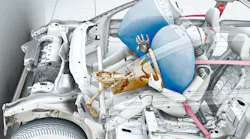
Stephen B. McDonald, vice president of government affairs, Specialty Equipment Market Association, says SEMA supports the effort to harmonize international regulations. But a single global standard can present "frequent and sometimes unexpected challenges," he adds. The concern is that, if adopted as is by NHTSA, the GTR will prevent aftermarket purchases and attachments of hood ornaments, bumper covers and lots of other products for fear a vehicle would fall out of compliance with any bumper/hood safety standard the OEM had met.
European auto manufacturers are driving the new international standard, according to Gerald A. Donaldson, senior research director, Advocates for Highway and Auto Safety.
"The draft GTR clearly exhibits the inordinate influence of European motor vehicle manufacturers in drafting weak GTRs, which the global vehicle manufacturing industry in turn leverages to reduce the stringency of U.S. motor vehicle safety standards," Donaldson says. As problematic as a weak GTR would be for aftermarket sales in the U.S., Advocates and other vehicle safety groups are likely to press NHTSA to back an even stronger GTR. European consumer groups feel the same way.
There have been differences of opinion between the Europeans and Americans as the GTR has developed, mostly over which autos the GTR should apply to. NHTSA supports wide application to passenger cars, sport utility vehicles, light trucks and other light commercial vehicles, while Japan's proposal would extend the scope to heavier vehicles, with the consideration that vehicle shape be the deciding factor. However that issue is resolved internationally, NHTSA will have leeway to adapt that and other GTR aspects to U.S. needs.
How much of the GTR to be adopted by NHTSA depends in part on the cost/benefit analysis to be performed. NHTSA says lives saved from any new standard would be between one and five percent of fatalities, which are just under 5,000 in North America. That is not an insignificant number of lives saved. But it is not clear that this level of benefits could support what might be huge costs to aftermarket retailers if a whole section of hood and bumper accessories could no longer be sold.
Stephen Barlas has been a full-time freelance Washington editor since 1981, reporting for trade, professional magazines and newspapers on regulatory agency, congressional and White House actions and issues. He also writes a column for Automotive Engineering, the monthly publication for the Society of Automotive Engineers.
About the Author
 Stephen Barlas
Stephen Barlas has been a full-time freelance Washington editor since 1981, reporting for trade, professional magazines and newspapers on regulatory agency, congressional and White House actions and issues. He also does a column for Automotive Engineering, the monthly publication from the Society of Automotive Engineers. He covers the full range of auto industry issues unfolding in Washington, from regulatory rulings on and tax incentives for ethanol fuel to DOE research and development aid for electric plug-ins and lithium ion battery commercialization to congressional changes in CAFE standards to NHTSA safety rulings on such things as roof crush standards and data recorders.