The diagnostic approach a technician takes should be well thought out. When done properly, a technician will choose the proper test(s) that can shorten diagnostic time.
Having a game plan and the proper equipment is very crucial to diagnosing modern vehicles. It is like an all-out war: You against the vehicle. But in this war, there are no prisoners taken. The only thing that you take to the next battle is the experience of winning or losing, and if you lose, your training and integrity get hit below the belt.The most important thing in repairing modern vehicles is understanding vehicle computer strategies: How a particular part you are testing functions, or how on-board computer systems decide to control those parts. You cannot test a device if you do not know how it functions.
I am a mobile technician who is hired to resolve problems with a vehicle that may be out of the scope of an average garage technician. At times, they lack knowledge of a particular system or do not have the proper tool to perform a task. A technician's knowledge is based on the shop's emphasis on continuing education and staying in the automotive loop. Having the right tools available means keeping test equipment up-to-date and providing a wide variety of service information systems that help diagnose vehicles.
DIAGNOSIS MISFIRE
VEHICLE: 1998 Ford E250 DRIVETRAIN: 5.4-liter Triton engine MILEAGE: 78,543 COMPLAINT: Multiple misfires.I was called in to diagnose a problem vehicle, a 1998 Ford E250 with a 5.4-liter Triton engine. This Triton didn't have the power of the god it was named after. It appeared to be missing on multiple cylinders. After spending hours of diagnostic time, the shop's owner thought the problem might be the coils, but he had no way of checking it. If he was not a conscientious shop owner, he might have tried replacing all eight ignition coils, which would have been an expensive guess.
During my initial diagnosis, I noticed the "Check Engine" light was flashing. This would confirm the presence of a misfire and could be an indication that the catalytic converter would be damaged if the engine was allowed to run.
My game plan started with my scanner. I checked the diagnostic codes and found a P0300 stored in memory. I checked the scan tool data, but there were no clues in the data stream. On Fords, the misfire monitor is a continuous monitor; however, Ford displays this data in Mode $06. Mode $06 displays the results of on-board diagnostic monitoring tests of specific components and systems that are not continuously monitored. Because Mode $06 contains the misfire data, I investigated. But no one cylinder or cylinders stood out as faulty.
The scanner allows the technician to gather a large amount of data very quickly. Analyzing this data, the technician can then determine a diagnostic direction. The diagnostic approach a technician takes should be well thought out. When done properly, a technician will choose the proper test(s) that can shorten diagnostic time.
To check the cylinder misfire, my choice was to connect my analyzer, which is an eight-channel oscilloscope. With this tool, I can view all eight ignition primary waveforms at the same time. A good ignition analyzer will help the technician pinpoint emission and drivability problems. Keep in mind that this engine has very little room for performing certain tasks.
Hooking up a coil-on-plug (COP) adapter to check coil secondary involves removing a coil, which takes a lot of time and could easily eliminate carbon tracking to the spark plug housing or cylinder head. This could have caused the technician to miss the problem with the vehicle. Placing non-intrusive COP adapters on each coil has noise and accuracy issues associated with it, and it is not an easy job on this engine, especially when the engine compartment has reached more than 400°F.
The quickest and easiest place to go is the Powertrain Control Module (PCM), which is accessible at the firewall near the brake booster. By using the engine performance wiring diagram, I connected my eight-trace oscilloscope to each of the control circuits for the ignition primary signals. On the Triton engine, the top and bottom rows of wires at the PCM connector are the injector coil drivers. See Figure 2.JOHN ANELLO is the owner and operator of Tech On Wheels, a mobile diagnostic service for mechanical and collision repair shops. An ASE-certified Master Technician since 1979, he also freelances as a technical trainer and writer and authored the book "Automotive Computer Diagnostics."
About the Author
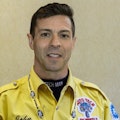
John Anello
Owner and operator of Auto Tech on Wheels
John Anello is the owner and operator of Auto Tech on Wheels, established in 1991 in northern New Jersey. He provides technical assistance and remote reprogramming with 21 factory PC-based scan tools. Driven by a passion for cars, John's business now services roughly 1,700 shops.