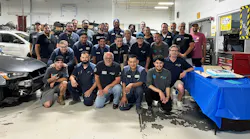
Become the Shop No One Wants to Leave
Key Highlights
- Existing team members can unintentionally drive away new hires through negativity or exclusion, highlighting the need for healthy team dynamics.
- Loyalty is now driven by personal relationships and a supportive work environment rather than long-term benefits or company tenure.
- Early signs of disengagement, such as reduced participation or negative talk, should prompt leaders to initiate open conversations with employees.
- Effective onboarding includes helping new technicians understand workflows, quality standards, and fostering relationships with coworkers.
- Leadership must actively address unhealthy behaviors and promote a culture of ownership, respect, and continuous learning to retain top talent.

One of the greatest threats to retaining a new technician may already be working in your shop. Leaders can spend months searching for an experienced technician, make a competitive offer, and feel relieved when that person finally accepts, only to lose the new employee because the existing team made becoming part of the team unnecessarily difficult.
I recently watched this happen when an experienced technician joined a collision center that genuinely needed his skills. Instead of being welcomed, he encountered negativity from several technicians already working there. They did not help him understand how work moved through the shop, include him in the group, or give him a genuine opportunity to become part of the team. Eventually, he chose to leave.
The shop had recruited the kind of technician our industry continually says we cannot find, but recruiting him was only the beginning. Shop leaders commonly ask whether a new employee will fit with the existing team. But we also need to ask whether the existing team is healthy enough to welcome a good employee and give that person a fair opportunity to succeed. We cannot continue talking about how difficult talented people are to find without examining the environments we are asking them to join.
Employees today are more likely to develop loyalty through personal relationships.
Loyalty Has Become More Personal
Employee loyalty to a company is largely a thing of the past. Decades ago, retirement plans and long-term benefits often encouraged employees to remain with one organization throughout much of their career. Benefits now move more easily with employees, and younger workers often view changing companies as a normal part of career advancement. Leaders are learning that they can no longer assume that a company name, steady paycheck, or years of service will create loyalty.
Employees today are more likely to develop loyalty through personal relationships. They may become loyal to an owner or manager who knows them, believes in them, and follows through on commitments. They also become connected to coworkers who support them and make difficult days more manageable. Those relationships give people a reason to remain when another employer offers more money or promises a better opportunity.
Retention Begins Before Someone Resigns
Employees always begin thinking about leaving before they submit a resignation. As those thoughts become more frequent, frustrations that once seemed manageable begin to feel larger, disappointing experiences return to mind, and another workplace begins to look more attractive. The belief that the grass will be greener somewhere else can gain momentum even when the employee knows very little about the other environment.
Disengagement often begins during this period. A previously involved team member may become quieter in meetings, stop offering ideas, show less initiative, or speak more negatively about the shop. Those changes do not automatically mean someone plans to leave, but they give a leader a reason to become curious and start a conversation.
A leader might say, "I have noticed that you seem less engaged than usual, and I want to understand what has changed for you. Is something happening here that we need to address?" The leader must then listen without immediately becoming defensive or trying to solve the concern before understanding the full situation. Leaders cannot prevent every departure, because family needs, relocation, career changes, and personal circumstances will always influence employment decisions. However, they can address many workplace concerns before disappointment becomes disconnection and disconnection becomes resignation.
Everyone shares responsibility for helping a new team member understand the shop’s processes and workflow.
Help People Become Part of the Team
A healthy onboarding process is more than completing paperwork, reviewing safety requirements, and giving a brief explanation of the technician’s responsibilities. New employees need help understanding how work moves through the shop, what repair quality looks like, how the quality control process works, where tools and equipment are located, and who to approach when questions arise. A key step in successfully onboarding a new team member involves leaders preparing the current team before someone arrives and establishing the expectation that everyone shares responsibility for helping a new team member understand the shop’s processes and workflow.
Assigning a respected coworker can create an immediate point of connection, but leaders should not assume that assigning a mentor guarantees success. Conversations during the first several months should include more than productivity and technical progress. Leaders need to check in occasionally to see whether the employee feels welcomed, knows where to go for help, and is developing trusting relationships with coworkers.
Leaders must also pay attention to how established employees respond when someone new joins the team. A new technician may bring different methods, deeper experience, or questions about processes others have followed for years. Existing team members may interpret those differences as criticism or competition. Healthy leaders address those concerns directly and make clear that exclusion, hostility, and withholding information will not be accepted.
Culture is what team members experience every day when they walk into the shop. The people they work beside influence what they begin to believe is normal and acceptable. When their daily circle demonstrates ownership, respect, a willingness to learn, and a commitment to high standards, those behaviors strengthen the entire team. Conversely, leaders shape retention by addressing unhealthy behavior before that behavior damages trust and pushes good people away. When daily interactions are characterized by insecurities, blame, resistance, shortcuts, and negativity, those behaviors can quickly become part of the culture.
Create Leadership Worth Staying For
Healthy leadership creates conditions where people can perform well and continue growing. Employees are more likely to remain where expectations are clear, commitments are honored, and accountability is fair. High performers want dependable coworkers, honest feedback, and confidence that poor behavior will be addressed. Confusion, inconsistent standards, and unresolved conflict gradually weaken trust, even when compensation remains competitive. Research has demonstrated that most employees leave a job because of the workplace culture, not solely for more pay.
Employees also need evidence that leaders care about their development, not only their current production. Growth may include advanced technical training, certifications, mentoring opportunities, stronger business knowledge, or preparation for leadership. Not every employee wants a management position, but most people want to know that their work is helping them increase their income potential and that someone sees potential beyond today’s responsibilities.
Our first focus must be retaining the talented people already in our shops by investing in their growth and making sure they feel valued, respected, and appreciated.
Communicate Appreciation That People Can Receive
Feeling appreciated contributes to job satisfaction and connection. Appreciation communicates that both the person and the person’s contribution matter, while recognition generally focuses on performance and results. Healthy workplaces need both, but an employee who receives attention only after exceptional production may conclude that their value to the shop depends solely on their output.
For appreciation to have the intended impact, the message must be specific, personal, and authentic. A leader might praise a technician who paused when something did not look right, researched the procedure, and made sure the repair was completed correctly. But how the message is delivered will differ across employees, one employee may value a private conversation with the supervisor, while another team member may appreciate acknowledgment during a morning meeting. Leaders should learn what communicates value to each team member rather than relying on the approach they personally prefer.
Appreciation should also move between coworkers rather than coming only from the owner or manager. When coworkers notice one another’s effort and offer support during demanding days, appreciation strengthens the relationships that make a team more difficult to leave.
Build a Shop People Choose Again
No leader can create a shop where every employee will stay forever, and retaining someone who consistently harms the team should never become the goal. But leaders can create a workplace where good employees do not leave on a whim, where people trust leadership, feel connected to coworkers, understand what strong performance requires, and see opportunities to grow.
Recruiting alone will never solve the workforce challenges facing collision repair. Our first focus must be retaining the talented people already in our shops by investing in their growth and making sure they feel valued, respected, and appreciated. This is especially important for veteran technicians who may have contributed to the business for years without consistently experiencing that kind of support. From there, leaders can build a strategy of continuous recruiting, recognizing that the greater responsibility begins after someone arrives. We must create teams that welcome people, develop their abilities, value their contributions, and give them compelling reasons to choose the shop again each day.
About the Author
 Sheryl Driggers
Sheryl Driggers is a seasoned entrepreneur, leadership coach, and keynote speaker with 24 years of experience in the collision repair industry. She co-founded and grew a three-location repair business in Tallahassee, Florida, before selling it in 2021. Today, Sheryl partners with Collision Advice and serves shops nationwide, helping leaders elevate both customer and employee experiences. She is certified with the John Maxwell Team, Appreciation at Work, Maxwell DISC, and The Working Genius, equipping organizations to build high-performing teams, strengthen culture, and deliver extraordinary customer care. You can connect with Sheryl on LinkedIn here.
 Dr. Paul White
Dr. Paul White is a psychologist who “makes work relationships work.”
Coauthor of the best-selling The 5 Languages of Appreciation in the Workplace (over 600,000 copies sold in 25 languages), he has developed tools to communicate authentic appreciation, leading to lower staff turnover, increased employee engagement, and higher productivity.
His online assessment, available in multiple languages, has been taken by 450,000 employees.
Dr. White has spoken around the world, and his expertise has been requested by Mercedes-Benz, Ford Motor Company, Caterpillar, and Bridgestone Tires. He has been interviewed by the BBC News , the New York Times , Forbes , and Fortune.