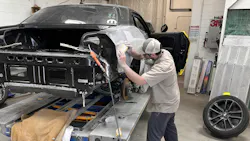
For as long as Dave Dunn can remember, the collision repair industry has been talking about a technician shortage.
“I remember going to the very first NACE, more than 40 years ago,” says Dunn, founder of Masters School of Autobody Management and owner of two large collision repair operations in Galesburg, Illinois. “The number one topic was the same thing you still hear today: the average body man is 50 years old, and there’s no good young people coming into the industry.”
Four decades later, the refrain hasn’t changed, but the stakes have. Vehicle technology is evolving faster than ever. Repairs are more complex. The traditional “do-it-all” technician is disappearing. And younger workers, often steered toward four-year degrees, aren’t lining up to replace retirees.
“The talent replacement pipeline just isn’t there,” says Brandon Roy, an instructor at NCM Associates and a third-generation collision technician. “This is structural. When complexity rises faster than your talent pipeline, shops need to start building their own.”
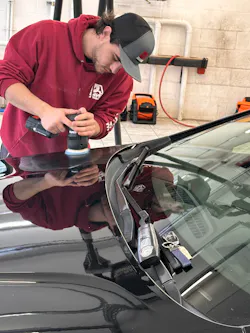
For both Dunn and Roy, the solution isn’t chasing experienced technicians with bigger signing bonuses or scouring job boards for the perfect hire. It’s developing talent internally and doing so intentionally, patiently and with systems that focus as much on people as they do on skills.
“No one’s coming to save you,” Roy says. “You need to develop your own internal academies.”
Internal development is a necessity
The collision industry’s labor challenges aren’t new, but they look wildly different than they did a few decades ago.
“The idea of a true ‘do-it-all’ tech is gone,” Roy says. “Now we see segmented roles: calibration techs, drivability techs, prep specialists. At the same time, schools are pushing university, and parents still see collision repair as a dusty, dirty industry.”
That disconnect leaves shops fighting over a shrinking pool of experienced workers. Dunn argues that shops getting caught up in that competition actually contributes to the problem.
“I started out just like everybody else trying to hire skilled people,” he says. “And I just got frustrated.”
What ultimately helped Dunn remove his shops from that competition was a leadership philosophy he encountered early in his career: hire for character and teach skills.
“You can hire skills, but you have to pay a lot of money, and it’s very difficult to shape character,” Dunn says. “Or, you can hire potential winners with good character and teach them the skills. It’s a lot easier to teach skills than it is character.”
Roy echoes that belief, saying most people will be able to learn how to do the job.
“The right people want to show up to work and do a good job,” he says. “We just need good foundations first.”
Internal development programs also provide something the industry desperately needs: continuity.
“There will always be people around to do the work,” Roy says. “We’re running out of people to lead, teach, and protect the culture. That’s where development really pays off.”
Dave Dunn’s Model: Starting Small, Thinking Long
At Dunn’s shops, internal development has been engrained in the culture for decades.
“We’ve always got several people in the wings,” he says. “Not everybody makes it, but many do. And the majority of my managers started somewhere like the detail department.”
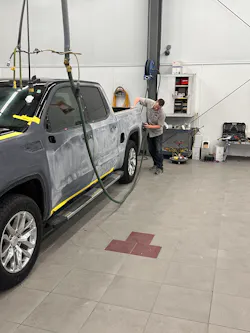
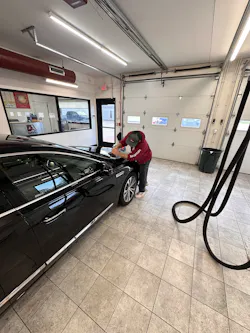
The detail department, in fact, is the cornerstone of Dunn’s talent pipeline.
“It’s the ultimate tester,” he says. “Do they come in on time? Can they take criticism? The boss picks at it, the customer picks at it, and there’s always a time constraint.”
Dunn employs six to seven full-time detailers at any given time, and no one sees it as a dead-end job.
“No detailer here made less than $40,000 last year,” he says. “The detail manager made $70,000.”
That entry point allows the shop to evaluate temperament and work ethic before asking employees to take on more technical roles.
“If you can cut it in our detail shop for a year or two,” Dunn says, “you can probably handle just about any job we have.”
From there, advancement is offered and tested regularly for employees. It’s not always going to work out, but Dunn says that’s not necessarily a bad thing.
“I’ve moved great detail workers to the paint shop and watched them fail,” Dunn says. “Sometimes people say, ‘You know what, I’d rather go back to detail,’ and that’s okay.”
Progression without upward mobility
In corporate America, company rosters are bloated with layers of lower- and mid-level management for employees to move “up” into. Collision repair doesn’t offer that neat, highly vertical path of career development, which is something that Dunn says can be a big advantage if shops know how to frame it.
“Sometimes the first move doesn’t need to be up,” he says, “but sideways instead.”
An employee might move from detailing to metal work, then into parts, estimating or production. Through that pathway, employees are getting tangible skills that will help them grow in their careers without necessarily getting a promotion or “moving up” to the next level.
It also helps owners discover those in their shop that might thrive in leadership, and some that may not at all.
“I had a technician who was incredible with her hands,” Dunn says. “I made the ‘brilliant’ move of making her a department manager. She hated it.”
Instead, she transitioned into facilities maintenance. Now, she’s now a star.
“She can fix a furnace, wire a light, keep the shop running,” Dunn says. “She didn’t want to be a supervisor, and that’s okay.”
Roy sees the same dynamic across the industry.
“We need to stop assuming leadership is the only form of success,” he says. “Progression can be cross-training, mentorship or specialization.”
Both leaders emphasize assessment tools such as Myers-Briggs or DISC profiles can be useful to help guide employees toward specific roles or teams.
“It’s a temperament test, not a personality test,” Dunn says. “Certain combinations work better in certain jobs.”
Roy agrees.
“It’s about creating a success profile, not just a job description,” he says.
Culture is the backbone of retention
Internal pipelines only work if people want to stay. Dunn credits the success of his shop’s robust pipeline to, above all else, regular and deliberate communications.
“We do quarterly employee reviews,” he says. “Not annually. Quarterly.”
The first two questions on the review form ask employees about what they think about shop culture and how they feel about compensation and benefits. Dunn says learning the answers to those questions terrifies many owners, but avoiding them doesn’t make the underlying feelings go away.
“If you don’t ask, do you think they don’t care?” Dunn says. “They care.”
Beyond pay, culture at Dunn’s shops is tangible. There’s a 1,500-square-foot employee engagement center with games, fitness equipment and family gathering space. There’s a medical assistance fund that covers half of out-of-pocket expenses, including veterinary bills for pets. After 20 years, employees and their families receive a weeklong trip to Hawaii.
“All of these things add up,” Dunn says. “Culture isn’t one thing. It’s everything.”
Roy frames culture as insurance.
“If you train someone and they leave, that’s one thing,” he says. “If you don’t train them and they stay, that’s much worse.”
Brandon Roy’s Perspective: Structure Creates Security
From Roy’s vantage point, many shops fail not from lack of effort but lack of structure.
“Small shops are focused on numbers and equipment,” he says. “They don’t pay attention to talent farming.”
Roy advocates for structured apprenticeship tracks, usually ranging from six to 18 months, with skill-based pay increases instead of tenure-based raises.
“We’re not giving raises because you’ve been here longer,” he says. “You earn them by gaining skills.”
He also pushes shops to outline long-term paths early, sometimes even on day one.
“When I had shops, many technicians didn’t even have savings accounts,” Roy says. “So, we built five-year plans. Here’s what your life and earnings could look like if you hit these milestones.”
Equally important is hiring correctly in the first place.
“Do culture-fit days,” Roy says. “Spend time with technicians, management, the whole team. Make sure the fit is right before you invest.”
And once someone is hired?
“One-on-ones,” Roy says. “Scheduled. No phones. Eyeball to eyeball.”
Those conversations prevent small issues from growing and make employees active participants in their careers.
Takeaways for better internal development
For shop owners looking to build or strengthen internal pipelines, Dunn and Roy agree on a few fundamentals:
- Hire for character, not convenience. Skills can be taught, but integrity, curiosity and resilience are harder to install.
- Create structured starting points. Entry-level departments such as detailing or disassembly can reveal far more than interviews.
- Define progression broadly. Growth isn’t always upward. Lateral moves, specialization, and mentorship matter.
- Communicate constantly. Quarterly reviews and regular one-on-ones keep expectations clear and trust intact.
In a labor market that shows no signs of easing, the strongest shops may not be the ones with the biggest recruitment budgets. Instead, they’re the ones willing to grow their own talent, one conversation and one opportunity at a time.
Investment in your employees isn’t optional. It’s the key to unlocking your shop’s full potential.
“The only thing worse than training people and having them leave,” Dunn says, “is not training them and having them stay.”
About the Author
 Noah Brown
Noah Brown
Noah Brown is a freelance writer and former senior digital editor for 10 Missions Media, where he facilitated multimedia production several of the company's publications.