Shops Must 'Adapt or Die' as Technology Accelerates Consolidation
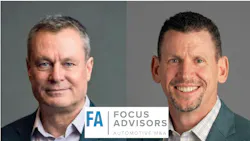
The collision repair industry is in the middle of the consolidation curve, which Chris Lane and John Walcher of Focus Advisors will discuss in-depth at the MSO Symposium on Monday, Nov. 2, in Las Vegas.
Walcher has been researching industry consolidation for the past three decades. The industry has moved through the beginning phase, which features many growth opportunities in a fragmented market, and the plateau phase, where consolidators have begun making moves and private equity begins investing.
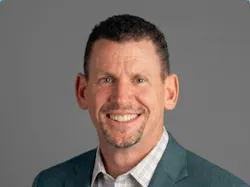
“When you think of the phases of consolidation, we put ourselves right in the middle,” Walcher said. “We call it the concentration phase, where the bigger players are adapting, changing a little bit as they would at this stage and the smaller consolidators are doing a little more of what they have been doing and catching up.”
Walcher said they will discuss how much longer it will take for the industry to transition to the fourth phase – dominance. This phase is characterized by a few major players having enough market share to exert influence over the direction of the industry. The fifth and final phase is the reopening of the industry, which Walcher said doesn’t always happen. It’s usually characterized by new technology helping break down market dominance For example, the internet enabled a company such as Amazon to start breaking down the market share Walmart had built.
Transformational technology, such as AI, accelerates consolidation. Lane said the presentation will cover four reasons for why that happens, one of which is if businesses do not adapt to the new technology, they will die. For example, MP3s drastically changed the way the music industry distributed music and how consumers engaged with artists. Another example Lane shared is the effect digitizing files had on doctors’ offices.

“If you owned a doctor practice and all of a sudden patient files get digitized, to be able to move your entire practice from a paper-based one to a digital one and then interact with now the insurance companies and be competitive with the larger companies who are able to do this efficiently becomes very difficult,” Lane said. “It caused a lot of people to exit that industry.”
For smaller MSOs and shops, Lane and Walcher will share insights into how they can prepare and adapt. One strategy Lane shared is finding new revenue streams that aren’t tied to carrier agreements.
“The most obvious ones would be building ADAS, which I think a lot of sophisticated operators have already embarked on that, so that's a new revenue stream,” he said. “Another could be taking on mechanical in-house. Another could be servicing fleet needs that are in your market or other operators don't have that opportunity or it's not part of their business model.”
Walcher added that shop owners must always think about their endgame.
“If they're growing to build to exit, then they need to be thinking about what's going to be desirable by buyers some point in the future,” he said. “The other thought is, and perhaps more related to the debt, is going to be that Just like the larger operators are going to, we certainly feel that the independents should be embracing AI as much as they can as well. It's going to be de jour for them, for everybody, for industry, and if they're not embracing it, if they're not thinking forward, moving forward, investing in the business and thinking about the future, then odds are they're probably falling behind.
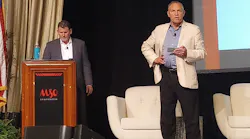
Lane and Walcher will present their full thoughts during the MSO Symposium on Monday, Nov. 2. For more information about the MSO Symposium, click here.
About the Author
 Peter Spotts
Associate Editor
Peter Spotts is the associate editor of FenderBender and ABRN. He brings six years of experience working in the newspaper industry and four years editing in Tech. He has a bachelor's degree in journalism from Western New England University with a minor in integrated marketing communications and an MBA. A sci-fi/fantasy fan, his current 2010 Honda Civic is nicknamed Eskel, after the character from the Witcher book series, for the scratch marks on its hood.
Don't miss Peter's next article. Sign up for FenderBender Today's Collision Repair News here.