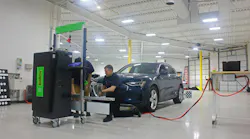
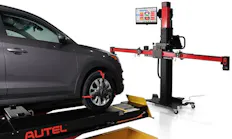
The use of advanced driver assistance systems (ADAS) can potentially reduce the overall number of accidents, but can also make repairs more complex and costly because the cameras and sensors that will be embedded into more panels and parts on the vehicle.
According to auto claims solution provider CCC, repair shops will need to retrain their staff and adopt new technology and processes in order to remain competitive in this evolving environment.
CCC’s most recent Crash Course report found that while ADAS will reduce certain types of collisions, they wont’ eliminate them entirely. In addition, because the current fleet is a mix of vehicles that either don’t have ADAS technology or have a variety of different systems, the effect on each vehicle when it comes to collisions can vary.
“In certain types of accidents, like front-to-rear collisions, the technology works really well,” says Susanna Gotsch, industry analyst at CCC, noting that a number of organizations and OEMS have demonstrated the effectiveness of theses solutions over the past several years. “However, very few cars actually have the technology, and you can’t pick who rear-ends you.”
CCC compared claims data between vehicles with and without ADAS systems. “What the data suggests is that when the vehicle is equipped with ADAS, you can expect to see some reduction of frequency, but you can also expect some reduction in severity depending on who hits who,” Gotsch says.
If you are driving an ADAS-equipped car and can’t avoid a collision, the technology will mitigate the damage because the system will slow the vehicle down before impact. That can reduce repair costs, even with the addition of cameras and sensors in the vehicle.
However, if you are driving an ADAS car and are rear-ended by someone who doesn’t have the technology, then the repair can be much more expensive because of the velocity of impact combined with the expense of the technology systems. “In those cases, we’re finding that repair costs are starting to trend higher because of all the parts that need replaced and lack of non-OE part alternatives,” Gotsch says.
The technology can also result in additional labor for each repair. If the repair shop isn’t familiar with the particular system, or doesn’t have the right tooling, they may also have to outsource the repair to a dealership. “You not only lose control of your cycle times, but also end up with a hefty sublet bill,” Gotsch says.

|
There is no time like now to kick off 2019 the right way with the right equipment. Read now how you can Get Started, complete proper repairs and meet OEM requirements. |

|
|
About the Author
 Brian Albright
Brian Albright is a freelance journalist based in Columbus, Ohio, who has been writing about manufacturing, technology and automotive issues since 1997. As an editor with Frontline Solutions magazine, he covered the supply chain automation industry for nearly eight years, and he has been a regular contributor to both Automotive Body Repair News and Aftermarket Business World.