Why Collision Shops Are Adding General Repair Bays
Key Highlights
- Collision gross margins have slipped from roughly 50% to 40% over 15 years, pushing owners to find profit beyond body work.
- Adding general mechanical bays gives shops a second, steadier revenue stream that doesn't depend on accidents or insurance claims.
- Running the mechanical side on its own dedicated system is what keeps the two businesses from blurring together and hiding which one actually makes money.
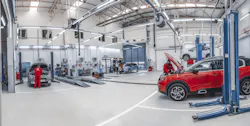

For years, collision repair was a good business to be in for one simple reason: the margins were strong. A shop could fix cars, work with insurers, and clear a healthy profit on the work.
That math is changing. As Focus Advisors' Chris Lane recently told FenderBender, a 50 percent gross margin wasn't unheard of in collision fifteen years ago. Today, the norm is closer to 40 percent, and he doesn't see that pressure easing. Ten points of margin is a lot to give up. It has owners asking a hard question: Where does the next dollar of profit come from?
For a growing number of operators, part of the answer is sitting in an empty corner of the building. They're adding general mechanical repair bays next to the body shop. A single-service collision center becomes a shop that can do both.
Why Collision Margins Keep Shrinking
The squeeze isn't coming from one place. Insurers have pushed labor rates down in many regions. Cars keep getting more complex, which means more equipment, more training, and more certifications just to stay in the game. Consolidation has also crowded the market, and the largest players now hold a significant share of the work.
Add it up, and the collision side gets tighter every year. You can fight for every tenth of a point through better processes and cleaner estimates—and you should. But there's a limit to how much margin you can squeeze back out of a business under this much pressure. That's why more owners are looking outside collision for the rest of the answer.
Why Mechanical Work Is the Natural Next Step
If you're going to add a second service, it makes sense to add one that uses what you already have. Mechanical repair fits that test better than most.
You already own the building, the lifts, the parking, and the location. You already have a base of local customers who trust you with their cars. And those customers need oil changes, brakes, suspension work, and diagnostics all year round. None of that depends on a crash or an insurance claim.
That last point matters most. Collision work is tied to accidents. That means your volume rises and falls with things you can't control, like the weather or how tough insurers are that quarter. Mechanical work runs on a steadier cycle. Adding it gives a shop a second stream of revenue that doesn't dry up when claim counts drop.
FenderBender's own coverage has noted the shift, with some collision shops now adding mechanical work to broaden what they offer.
What the Operational Split Looks Like in Practice
Here's the part owners underestimate: collision and mechanical are two different businesses under one roof. They look similar from the outside, but they run on different rhythms.
A collision job can sit in the shop for days or weeks. It moves through estimating, parts, body, paint, and reassembly, with the insurer involved at every step. A mechanical job is often in and out the same day, paid by the customer directly, with no insurance claim at all.
The two have different workflows, different parts ordering, different pay structures for technicians, and different ways of measuring a good day.
Run them on the same system built only for collision, and the mechanical side gets messy fast. The scheduling doesn't fit. The repair orders don't match how mechanical work flows. The numbers from the two sides blur together, and you lose the ability to see which one is actually making money.
That's why operators running both sides tend to keep the mechanical work on software built for it. A dedicated auto repair platform like AutoLeap, for example, handles the mechanical side the way collision software handles the body shop. Its scheduling, estimates, digital inspections, parts management, and invoicing are all built around how general repair shops operate. The body shop keeps its system, the mechanical bays get theirs, and the owner can finally see each side clearly.
Making the Two Sides Work Together
The goal isn't to bolt on a separate business and hope it pays off. It's to let the two sides feed each other.
A collision customer who needs brakes can be handed straight to the mechanical bays instead of being sent down the road. A mechanical customer who gets in a wreck already knows where to bring the car. The same trusted name now covers more of what a driver needs. That means more visits, more revenue per customer, and less reliance on the collision cycle.
Done well, the mechanical side does more than add revenue. It smooths out the slow stretches, deepens the customer relationship, and gives the shop a profit center it actually controls.
The Bottom Line
Collision margins aren't likely to climb back to where they were. That part is mostly out of the owner's hands. What is in their hands is the decision to stop depending on a single, shrinking stream of revenue.
Adding mechanical bays won't fix margin compression on the collision side. But it gives a shop a second engine. That engine runs on a steadier cycle and uses assets the owner already has. For a lot of operators, that second engine is starting to look less like an option and more like the plan.