Exit, Merge, Grow, or Sustain? Strategize Your Course Now

Regardless of how long you’ve been in the collision repair industry or what your situation looks like, there’s no room for complacency; you always have to be thinking about what’s next.
Consolidation is accelerating. Margins are tightening. Equipment, training, certifications, and carrier expectations continue to rise. And while many shop owners still love fixing cars and serving their communities, fewer feel confident that doing business the same way they did even a year ago will be enough to carry them forward.

“At some point, you’ve got to make a change,” Chris Lane, managing partner of Focus Advisors, says. “You can’t just stay where you are. You’ll die.”
That stark reality is forcing owners across the country to wrestle with the same question: What’s the next step?
Should they sell and exit the business they’ve spent decades building? Should they merge with another entity? Should they grow by adding locations, partners or outside investment? Or should they try to sustain what they have by working smarter, not necessarily bigger?
The answer is deeply personal, and there’s no one correct solution. One thing, though, is clear: Standing still is no longer an option.
Getting emotional
Most shop owners feel a deep, personal connection to their business, which can make planning for the next step as much an emotional exercise as it is a strategic one.

For those who work in a family-owned shop, the emotions can be cranked up even higher. Jordan Beshears, president of Steve’s Autobody in the St. Louis area, knows that firsthand.
He took over the family business as his parents stepped away, a transition that ultimately worked out for everyone, but not without some friction.
“When you mix business in with it, it can get messy at times,” Beshears says. “That was a weird feeling because we have such a good relationship, my parents and me, but emotion got the better of all of us at times.”
Beshears had come up through the shop detailing cars, working in Paint, writing estimates, and running production before stepping into leadership as his parents began slowing down. What he wanted for the business and what they wanted weren’t always aligned.
“I think sometimes we were just looking at it from our own perspective and not the other person’s side,” he says. “Ultimately, it just comes down to communication.”
Looking back, Beshears doesn’t pretend the transition was perfect.
“I wouldn’t say we handled it the best,” he admits. “But we got through it, which was the most important part.”
Now that the transition is done, everyone seems to be in a good spot; his parents are enjoying retirement without the stress of the business, and the company is moving faster with a unified vision.
“It’s got everybody on the boat moving in the same direction,” he said.
That emotional component — identity, family, legacy — is often overlooked when owners talk about selling or succession. But ignoring it doesn’t make it go away, and acknowledging those difficult feelings upfront could help make the process easier for everyone involved.

Back to basics
Whether a shop owner is thinking about selling, growing, or aligning with a franchise or network, preparation is critical. For Beshears, that preparation started with financial clarity.
“If you don’t have clean financials, it just muddies the waters,” Beshears says. “On the selling side, it can impact the value you’re going to get. On the buying side, it’s going to hurt your relationship with lenders.”
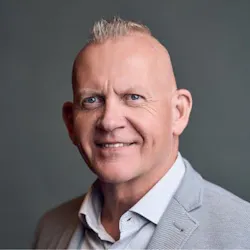
Daryll O’Keefe, vice president of North American business development for Fix Network, agrees.
“If you’re trading on EBITDA,” O’Keefe says, “you better have EBITDA to trade.”
Too often, shop owners delay getting their books in order because they aren’t planning to sell anytime soon. Beshears says even if you’re not planning on making a move, that mindset can backfire.
“You never know when an opportunity is going to arise,” Beshears says. “Somebody might come knocking. And if your financials aren’t clean, it just adds stress and slows everything down.”
Clean books don’t lock an owner into a decision, but they preserve options. Whether the next step involves a bank, a buyer or a strategic partner, clarity speeds the process and protects everyone involved.
Taking a step back
For some owners, the right next step is to exit the business. Lane cautions before selling, though, to consider what that means for you beyond the transaction.
“For most people, their collision repair business is the most important asset they have,” he says. “It’s probably the single most amount of energy they’ve spent building something in their lives. Moving on from it is an enormous decision.”
That’s why Lane says it’s critical to consider both selling and merging.
“If you’re going to sell, it’s usually because you want to retire or do something else,” he says. “A merger is different. You get to do things that you couldn't do before while removing some areas of duplicity.”
If a shop owner still feels passionate about the business but is growing tired of the day-to-day, merging with another business, aligning with a franchise or otherwise being acquired can be a good way to stay involved with the shop while removing some of the day-to-day responsibilities.
“You can bring in a partner to help you operate or grow because they are providing some expertise you don’t have, or partner with an investment firm like a PE firm to grow much more rapidly, or partner with an operator who also has locations to grow that way,” Lane says. “But that last possibility is really rare for operational, functional, managerial and directional reasons.”
Further to that point, Lane also says partnerships are not very common, however, and says most shop owners he works with that are looking to sell or be acquired are doing so with the intention to exit the industry.
“More often than not, it's because life is determined for them or they have determined in their lives that they want to do something else,” he says. “That’s where we see the decision to exit or the decision to merge be made.”
Even when owners know they want to exit, the emotional reality often surfaces mid‑process.
“We see our process stall in certain places,” Lane says. “Not because it’s mechanical or logical, but because there are emotional blocks.”
Those emotions don’t just involve the owner, he adds. Employees are often top of mind.
“When you exit, you’re giving your employees new employers,” Lane says. “You want to make sure they’re put into the best hands possible. That’s hard.”
Lane emphasized that his firm never tells owners it’s time to sell. Instead, the goal is to help them understand their position and options.
“Our job is to help them figure out how to get where they want to be,” he says. “That’s not always financial. A lot of it is personal.”

Growing effectively
For other owners, selling isn’t appealing, but staying exhausted isn’t either.
O’Keefe said many shop owners who initially think they want out are really just burned out by doing everything the hard way.
“When somebody thinks about selling, it’s not because they’re happy with the situation,” he says. “It’s because it’s hard.”
That’s where strategic growth, or alignment with a franchise or network, can change the equation.
“When we show people there’s an easier way to do business,” O’Keefe says, “all of a sudden this becomes an investment again.”
By tapping into standardized processes, operational support, marketing resources, and shared data, owners can reduce the daily burden that leads to burnout.
“They’re not doing all the heavy lifting themselves anymore,” O’Keefe says. “They have people supporting them.”
In many cases, O’Keefe says doing that work to distributing the workload and reimagining how to run their shop pulls shop owners back in and reminds them of why they entered the business in the first place.
“More often than not, people stay,” O’Keefe says. “And not only do they stay; sometimes they go on to buy another shop.”
He points to ProColor Collision operators as an example of people who started with one location, refined their processes, then expanded once the systems were in place.
“They realize this isn’t as hard as they thought,” he says. “There’s actually a way to do this business that’s sustainable.”
The myth of staying the same
Throughout every scenario outlined above, one constant emerges: the idea of ‘staying the same’ doesn’t work.
“There is no status quo,” O’Keefe says. “You’re either pushing forward or you’re going backwards.”
Lane agrees, pointing to shrinking margins and increasing competition.
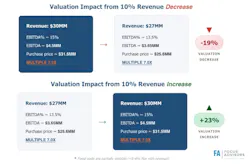
“Fifteen years ago, 50 percent gross margins weren’t unheard of,” he says. “Now the norm is closer to 40 percent, and that pressure isn’t going away.”
Businesses that want to “hold steady” still need to be on top of industry trends and doing everything they can to optimize their workflow.
“If you’re not reinvesting in training and equipment,” O’Keefe says, “you’re actually going backwards.”
That doesn’t mean every shop needs to become a multi‑location MSO, but it does mean owners need a plan.

Taking the first step
One reason many shop owners delay planning is fear of being pressured into a decision before they’re ready.
All three sources stress that those early conversations should be exploratory, not binding.
“This is a no‑pressure conversation,” O’Keefe says. “We’re easy to talk to. We just want owners thinking about their business.”
Lane described his firm’s role similarly.
“We’re happy to help people put a stake in the ground and show them where they sit today from a valuation and market perspective,” Lane says. “They can use that information however they want.”
Planning doesn’t force action, but avoiding planning can eliminate choices down the road.
“The best time to plant a tree was 20 years ago,” O’Keefe says. “The second best time is today.”
There’s no universal answer to whether a shop owner should sell, grow, or align with a franchise or network. Every business and market is different.
There is a common thread among shops that navigate change successfully, though. They prepare early, keep their financials clean and take time to step back from the day‑to‑day to see the bigger picture.
O’Keefe offers a simple exercise.
“Drive to your facility a different way,” he says. “Try to look at it like you’ve never been there before. What’s your impression of your own business?”
That fresh perspective, combined with honest conversations and solid fundamentals, can help owners choose a next step that fits their goals, not just the market’s momentum.
Because in today’s collision repair industry, doing nothing isn’t standing still. It’s falling behind.
About the Author
 Noah Brown
Noah Brown
Noah Brown is a freelance writer and former senior digital editor for 10 Missions Media, where he facilitated multimedia production several of the company's publications.