Dalton Collision: A Legacy of Proper Repairs and Strategic Growth
Key Highlights
- Dalton Collision has relied on repair procedures since 1991, transitioning from printed manuals to digital access via tablets for efficiency.
- The shop maintains nearly 20 OEM certifications and has been I-CAR Gold Class-recognized since 1998, emphasizing quality and proper repairs.
- Strategic expansion includes a 30,000 sq. ft. facility in Knoxville, featuring innovative paint booths and infrared curing systems to maximize workflow.
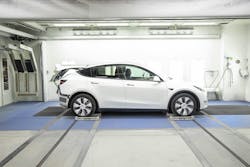
- Specializing in aluminum repairs with dedicated clean rooms, Dalton Collision serves high-demand brands such as Tesla, Rivian, and Ford, capitalizing on niche expertise.
- The business focuses on market research, customer satisfaction, and employee training, including a new registered apprentice program to address industry labor shortages.
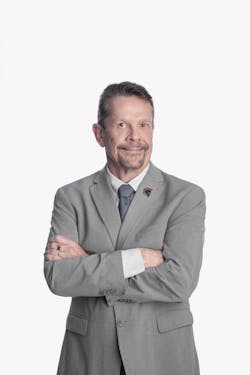
“People talk about repair procedures as if they’re something new,” says Jerry Dalton, owner of Dalton Collision, a two-shop MSO in eastern Tennessee, “but they've been around for a long time.”
He would know; he’s been relying on them since he first started the business in 1991, buying physical copies of every manufacturer’s repair manual he could get his hands on from the get-go.
“Back then, we worked on a lot of Hondas, and we liked working on them because they had clear-cut repair procedures and manuals.”
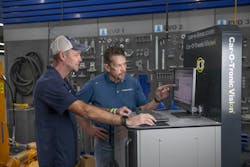
Nowadays, Dalton and his team still complete all repairs by the book — they have nearly 20 OEM certifications and have maintained I-CAR Gold Class status since 1998 (longer than any other shop in the state, to Dalton’s knowledge). The main difference now is the ease of access. Instead of relying on printed materials, technicians now access repair manuals electronically from their own personal tablets.
The importance of a safe and proper repair simply can’t be stressed enough, says Dalton, who likens it to “packing someone else’s parachute” — an analogy he learned from Mike Anderson, a “phenomenal” mentor and founder of the Spartan Group that Dalton has been a member of for four years.
“When you’re packing somebody else's parachute, you'd better make sure it's going to operate the way it's intended when it opens. I'm just really big on proper repairs — from a liability standpoint and from a customer experience standpoint, I’ve just always wanted to make sure we're repairing cars the way the manufacturers designed them.”
From Painter to Owner/Operator
Dalton originally worked as a fiberglass repairman for Sea Ray boats in his “early days” before making the transition to painting cars.
“I just kept going and kept going. I started working on some cars. Then I met a couple of guys that I hooked up with, a couple of brothers. We started repairing, and then we started a three-man body shop. Over time, here I am!”
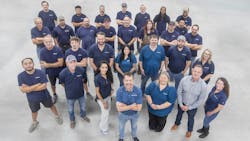
He quit painting to run the business full-time once they hired their fifth or sixth employee, he recalls. Fast forward a couple decades and the company now has nearly 50 employees between its two locations, in addition to almost 45,000 sq. ft. of shop space.
The first expansion happened in 1998, when, after adding onto the original small garage in Blaine several times, Dalton took the plunge and built a 7,000 sq. ft. facility at the original location. Since then, they’ve continued adding onto that shop, now occupying 13,000 sq. ft. in the small town that’s situated in the foothills of the Appalachian Mountains.
Dalton operated solely out of that original location for more than 25 years before moving into the Knoxville market with a second shop in 2018. And when the time came to grow, he did it strategically.
“We had been looking for maybe five or six years when we finally came across a building that we thought would work really well.”
Sitting at just 4,000 sq. ft. in what was formerly a window and glass manufacturing operation, the building would require a complete overhaul to meet Dalton’s needs, but it was all about location, location, location. Market research revealed that $32 million in collision sales were happening within a 10-mile radius of the shop every year.
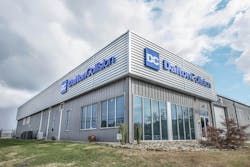
“We expanded on it once — we’re now at 30,000 sq. ft. We spent a lot of money remodeling the entire building.” Even though it’s an older building, he says, everyone who sees it “thinks it’s brand new.”
“We put new paint on it. We put a facade on the front. We totally remodeled the interior. We polished the floors. We put new equipment in it, of course. Because of the configuration of the shop, we developed two paint booths and two prep stations with side-load systems.”
His is likely the first shop in the state of Tennessee, he believes, using the Global Finishing Solutions side-load system for paint booths.
“Vehicles are loaded on tracks and slide sideways into the booth, then come out the front, which allows for a continuous workflow.”
“We also put in [GFS REVO] infrared system to cure our solvents. Whether it's filler, primer, base coat, or clear coat, everything gets cured with infrared. That way, we're pulling 100% of the solvent out. We also use Ultra UV technology for that.”
More shops are implementing this type of booth, he says, because it allows you to maximize your shop space and expedite repairs.
“You don’t need as big a footprint for a paint shop like this,” he explains. “It allows you to have more space for body, mechanical…all the other operations that you need to have.”
Aluminum Specialists
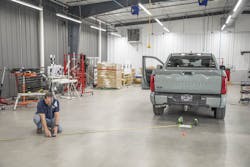
The Knoxville shop includes 6,000 sq. ft. of operational space for dedicated ADAS calibrations. Both shops have dedicated aluminum rooms, a requirement for several of the certifications they hold, including Ford, Rivian, and Tesla. Dalton’s interest in aluminum started with Ford’s aluminum repair program in 2014 (in preparation for the release of the aluminum-bodied F-150 in 2015) and kept growing from there.
“Any aluminum work that we do, we do it in a clean room, completely separated from any other metal. We have to have a separate vacuum system, separate tools, separate sandpaper…everything has to be separate, since contaminants from steel can cause galvanic corrosion on aluminum.”
Specializing in aluminum repairs, says Dalton, has been a great revenue source for the business. They regularly get referrals from other shops without the equipment and setup for such jobs, and since both the Blaine and Knoxville shops have dedicated aluminum rooms, they have plenty of capacity.
“Pretty much any aluminum or electric vehicle programs, we try to specialize more in those because it's a market that a lot of shops don't want to invest in. We’ve decided that’s the direction we want to go.”
Dalton’s current certification portfolio includes Acura, Ford, Genesis, GM, Honda, Hyundai, Infiniti, Kia, Lexus, Nissan, Rivian, Stellantis (Chrysler, Dodge, Jeep, Ram, Fiat, and Alfa Romeo), Subaru, Tesla ,and Toyota .
He plans to continue obtaining more but is always guided by market research to enhance the shop’s value proposition. Every operational move he makes, whether acquiring a new store or certification — will be done strategically and supported by data.
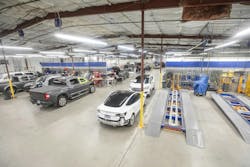
“When you’re picking an OEM certification, do market research first and see what vehicles are in your area,” he recommends. If you don’t do that, “you’re just spending money,” he warns. “Make sure you can leverage it. We go for the ones that bring the most value.”
Dalton also recommends reaching out to dealers to get referral work from them.
“Market it and let everybody know you have it. It’s a way to differentiate us from the competition.”
He also highly recommends surveying customers and using that information to hone business operations. Treat your customers right, he implores, and they’ll give you “free advertising” by promoting the business to others through word of mouth and online reviews.
“We always ask our customers for Google reviews.”
Forward Momentum
Like everyone else in the industry, Dalton’s claims volume has been down this year, he says, and the shop didn’t experience the growth he’d hoped for — but they’ve held their own, maintaining sales on par with last year…which has meant they haven’t had to let anyone go or lay anyone off.
That’s thanks in large part, he thinks, to the fact that people continue to move to Tennessee, and the Knoxville market especially continues to grow disproportionately to other areas of the country.
“My vision is to keep my brand intact and keep growing, always guided by doing the right thing. I've had opportunities for acquisitions in the past, but I’ve passed on them because I didn't feel it was quite right. But as time goes on, we’ll possibly acquire or maybe build a ground-up operation — I feel good about our organization, and we'd like to see it grow.”
With two sons and a daughter involved in the business, he’s confident that will happen — and he’d love to see Dalton Collision stay in the family someday when he’s ready to retire.
Another focus in the immediate future is growing the new registered apprentice program that the team just started. Though he’s always preferred to train his own techs — and has had great success doing it (in just the last couple years, he estimates that six “mentored” techs have joined the business full-time) — this is his first foray into an official, registered program.
“It’s the future of Dalton Collision,” he says, and a solution to the labor shortage facing the entire industry. “We want to grow the business with new techs, training them the way we want them to be trained.”
“We always want our employees to feel secure,” he adds, saying that his team is one big family. Dalton offers health insurance and benefits like paid holidays, PTO, a 401(k) plan, and plenty of opportunities for training and career advancement to those who work for him.
“Collectively, as a company, we believe in ethics and doing the right thing. In the end, doing what’s right might not be the cheapest way to do it; it might not be the most expensive, either. But always doing the right thing — I think that’s been the key to our success.”