Time flies. In the repair industry, entire eras marked by market and operational challenges can slip into memory in what often feels like seconds. Just over a decade ago, shops were struggling mightily understanding aluminum and OEM certification. The fundamental process of accessing parts, especially OEM versions, was unwieldly — usually performed manually with telephones and fax machines, and often a fistful of antacids and a prayer that the best parts mix would arrive on time and in proper shape.
A decade later, it’s a new world. Today, vendors provide procurement options offering electronic solutions that can order the right parts almost immediately and feature a host of other evolving benefits designed to increase efficiency and profits. A task that once took hours per job now can be performed efficiently and accurately in mere minutes, saving shops time and revenue lost to incorrect orders and other missteps. Here’s a brief look at several of the most popular procurement platforms, the operating philosophies that guide them, and their individual perks. Each is cloud-based, operates across Web-bases (computers, tablets, and smartphones), and utilizes VIN-scrubbing capabilities.
CCC ONE: The Evolution of Supplier Relationships
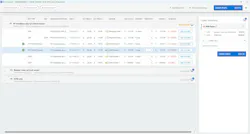
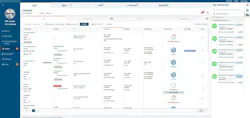
In 2013, CCC launched its e-commerce parts platform within CCC ONE, shifting pricing and inventory lookup from manual searches of sometimes out-of-date catalogs to accurate, electronically generate data delivered at the front end of the estimating process. Vice President of Product Management Sean Fitzgerald says the platform is built on relationships, connecting collision repairers directly to a network of 7,000 preferred suppliers across OEM dealers, aftermarket vendors and recyclers.
CCC ONE integrates quoting, electronic ordering, electronic invoicing, reconciliation, and accounting exports into a single continuous workflow without requiring rekeying or secondary system logins. The platform’s architecture maintains a single shared record among shops, insurers, and suppliers. Price changes, superseded parts, and estimate supplements update instantly across all parties without requiring phone calls.
Fitzgerald says the system integrates with virtually every major vehicle manufacturer for promotional programs and dealer network ordering. In place of traditional dealer conquest programs, CCC ONE displays promotionally priced OEM parts upfront directly inside the estimating interface as parts are selected.
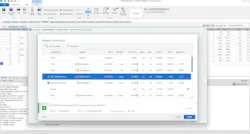
While CCC itself is an information provider, its procurement tools are engineered to function identically regardless of where an estimate originates. The platform imports estimates from other major information providers so shops follow a single ordering process. CCC maintains dedicated internal teams to manage supplier onboarding and maintain direct system integrations.
Fitzgerald says the platform provides additional benefits such as artificial intelligence upgrades that permit shops to scan paper delivery invoices with a mobile application that matches line items to the repair order and reconciles prices instantly, flagging discrepancies on the spot. Upcoming AI developments will allow shop management to establish custom parts sourcing rules and automatically enforce them across every repair order.
Fitzgerald notes CCC ONE can boost shop revenues by preventing bottom-line financial leaks caused by incorrect parts, restock fees on returns, uncredited core charges, unbilled freight costs, and parts ordered but omitted from final repair orders. He says placing orders electronically through the system reduces parts returns by 16 percent.
Parts quoting and electronic ordering capabilities are included in the standard CCC ONE subscription at no additional charge across all 30,000 shops on the platform. The platform is designed to handle main routine parts volume without requiring a secondary procurement system, though shops may occasionally use direct phone calls for specialty or rare local parts.
OEC: Dual Platform Design
OE Connection (OEC) offers two main e-commerce solutions: CollisionLink and OPSTrax. CollisionLink, of course, is the longtime flagship, OEM-only collision platform with over 20 manufacturer pricing programs, serving 10,000 dealers and 16,000 shops. It’s designed for shops focused on OEM parts or seeking competitive OEM pricing. RepairLink, also from OEC, is the mechanical parts version of CollisionLink. Shops often use both to cover any parts needing repaired. Both are free.
OPS - Overall Parts Solutions
General Manager and Vice President of Collision eCommerce Chris Smart explains that OEC acquired OPSTrax in late 2021 to serve a segment — primarily MSOs — needing an all-part-type procurement platform. OPSTrax uses business rules and automation to deliver scale and consistency when ordering all types of parts (OEM, aftermarket and salvage).
Like CCC ONE, both platforms leverage direct buyer-supplier relationships. The systems import estimates and identify parts. OPSTrax uses business rules to route orders to specific suppliers based on price, delivery, and other factors. CollisionLink highlights promotional OEM parts and lets dealers offer competitive pricing to convert non-OEM parts to OEM.
Smart says OPS Trax is especially beneficial for MSOs because it enables consistent, scalable procurement strategies and better forecasting. (CollisionLink is engineered for organizations of any size, including single-site operations, focused on competitive OEM pricing.) OPSTrax’s core advantage, Smart says, is rules-driven automation that aligns procurement with a shop’s strategy (for example, by part type, price, or delivery). It’s also an end-to-end management tool for invoice reconciliation, credits/returns, and delivery visibility that he says can save significant time and costs.
OEC works with all major OEMs and holds agreements with most, managing their marketing and conquest programs. Its platforms integrate with dealer management systems (DMS) and shop systems like Mitchell and ProfitNet to pull estimates and push POs/invoices. To complement both platforms, OEC offers RepairLogic for OEM repair procedures, Estimate IQ to ensure complete/accurate estimates for carrier payment, and a certification network to manage OEM shop certification programs. Down the road, Fitzgerald says that OEC aims to integrate automation wherever possible to ease the manual workload of all its partners.
The base version is free for shops to order parts. Premium offerings — such as rules-based automation for MSOs — are available via subscription. Suppliers pay software as a service (SaaS) fees.
PartsTrader: The Online Parts Marketplace
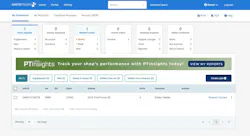
What if shops could post their parts need per invoice on an interface that provided live bidding for the best prices for OEM, aftermarket, and salvage parts and their delivery options? That’s the idea behind PartsTrader.
Vice President of Sales Enablement Greg Horn explains PartsTrader operates as an open marketplace with blind bidding, averaging roughly 7.93 bids per part. Shops export estimates from CCC ONE, Mitchell, and Audatex into the system. Dealers and suppliers then place their best offers without seeing competitors, creating “competitive tension” that can lower OEM pricing through dealer-to-dealer competition, netting better deals than typical price matches.
Quotations include delivery timelines, allowing shops to align parts arrival with repair plans. Shops can select slightly cheaper parts with longer lead times if they match repair duration, or pay more for faster delivery when schedule demands, improving throughput and customer satisfaction.
PartsTrader also offers other cost savings features, supporting OEM conquest and discount documentation. The system displays the aftermarket “bogey” price that dealers can match for conquest programs, producing a compliant, digital paper trail that can be submitted within dealer systems. Horn says this streamlines discount validation and avoids manual photocopying/scanning, easing administrative burdens for OE parts departments.
After selecting parts and suppliers, PartsTrader exports back into the estimate with line and labor corrections and relevant information.
PartsTrader works with most OEMs, apart from some exotics and Tesla, which Horn says restricts its parts ecosystem, with only an occasional small, recycled presence.
Horn says the system also works with insurer rules. When an insurance client is involved, PartsTrader enforces the specific carrier’s parts policy. Shops see only compliant parts based on carrier rules (for example, CAPA/non-CAPA, or acceptable non-standard parts such as salvage), preventing inadvertent policy violations during ordering. At the same time, PartsTrader blocks insurers’ view of a shop’s buy price or profit margin — only the list price used on estimates — ensuring commercial privacy.
PartsTrader is free to shops. Its revenue is generated by charging suppliers a percentage of successful sales.
Exploring the Procurement Universe
Apart from shops that occupy a very specific niche with a small set of dedicated suppliers, every operator could see benefits using these or similar e-commerce platforms. With price points accessible to even the most modest of shops, OEM procurement tools provide opportunities to build efficiency and boost shop profits by removing sometimes tedious and frequently labor-intensive tasks. The main questions shops need to ask are what system(s) are right for them. Begin with the information noted here and reach out to vendors to see what platform(s) would work best for your shop. Over the next decade, you might wonder how you ever did business without them.
 dreamstime_458029867
About the Author
 Tim Sramcik
Tim Sramcik began writing for ABRN over 20 years ago. He has produced numerous news, technical and feature articles covering virtually every aspect of the collision repair market. In 2004, the American Society of Business Publication Editors recognized his work with two awards. Sramcik also has written extensively for Motor Age and Aftermarket Business World. Connect with Sramcik on LinkedIn and see more of his work on Muck Rack.