The Critical Role of Accurate Repair Material Documentation for OEM and DRP Reporting
When I started working in the automotive insurance industry over 25 years ago, we learned to make quick decisions as adjusters and estimators. Our days were driven by a labor-intensive workload and at times, minimal guidance. However, the “three-day repair” was the average gold standard. We negotiated claims face-to-face, and it was acceptable to fix a dent or to bolt on a panel, spray it, and ship it. All the while, shop materials were simply not a topic of conversation. Every claim I handled was settled either verbally or in person, but today the typical direct repair program (DRP) shop-to-insurance interaction has shifted to advisor scores and change requests.
From Simpler Repairs to Complex Realities
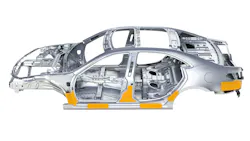
Today, things are also much more complicated. We have complex electronics, hybrid systems, EVs, ADAS, and more that add to repair intricacy. The CAFÉ standards have enforced a shift towards lighter, stronger, more fuel-efficient vehicles with advanced metals. Changes in vehicle anatomy and the way repairs are done require the documentation of OEM-specified materials such as rivets, adhesives, seam sealers, foams, cavity wax and more.
An increased control of repairs by the OEM gives us clear directions as to how each repair is required to be completed, which increases the burden of administrative duties on shops. Planning time to research OEM procedures, plan the repair, and present this to your customer takes a significant amount of time, and it can be hard to get buy-in from your customer and secure the keys.
OEM Standards Raise the Stakes
Disconnects in the industry can occur as insurance policies are not written to OEM standards. While vehicle owners want their repairs to look great, the shop, technician, and insurer have a duty to research and follow the OEM direction for repairs and the materials they certify. Vehicles are factory engineered to perform as designed in the case of a collision. In the event of collision, you’re rebuilding that car to perform as designed again in the next collision. Weld placement, type and size, wire type, and the structural bonding adhesives all work in concert to ensure crash energy is distributed within the vehicle structure in such a manner to protect the driver and any passengers. Therefore, it is critical to use proper procedures and materials throughout any repairs. The next incident on this vehicle could happen in 15 minutes or 15 years. The vehicle is expected to perform to OEM standards as it did from the factory to potentially save lives.
It can be complicated when the DRP is trying to execute a safe and proper repair for the customer while working within the service level agreements (SLAs) outlined by the insurer for materials. For example, part code tables provided by insurers are at times made up of generic placeholders which can hinder the proper documentation of a repair. Part codes are generic and provide little information as to the material manufacturer or part number which can make it challenging for shops to certify a proper repair.
The Gap Between Policy and Proper Repair
Estimating guides serve as the mediation tool between shops and insurers and help to determine the standard procedures included in the repair. Consequently, shops need to ensure they negotiate and add any additional labor and material requirements to ensure they can repair the vehicle to pre-crash worthiness. What happens during the repair matters, and everyone has a duty of care to ensure driver safety is priority.
There can be instances where some materials are not paid for on a regular basis and are being pushed as the “cost of doing business.” However, this is simply not true by the definitions in the guides to estimating. According to the definition of a “new undamaged panel,” the refinish material calculation starts when a panel is restored to a new undamaged panel. Therefore, the abrasives, fillers, primers, masking, and other materials required to have the panel ready for the paint shop should be invoiced but are rarely included.
As an example, the restoration of corrosion protection is more than a small charge on an estimate because the proper restoration of corrosion protection is an entire system. Non-refinish supplies such as weld-through coatings, seam sealers, and adhesives are rarely recovered within a paint material calculation. Even though these materials may not be covered, they are extremely important to the repair process and are a requirement of all manufacturers. Additionally, there is little to no labor compensation for the repair procedures to apply materials. Although these misalignments exist, technicians should still ensure they follow OEM repair procedures.
Reviewing the OEM repair procedure is critical to ensuring the process moving forward is thorough. Then, material and paint manufacturers, estimators, and technicians should hold one another accountable cross-functionally. It is important to ensure that all stakeholders align the knowledge and documentation to complete the repair, create the estimate line, and justify the charge accordingly. This kind of documentation is valuable in helping an adjuster document a claim file appropriately in support of a potential claim audit or subrogation case.
Documentation Is the Difference
There are several ways to help manage required materials attributed to each repair order. A shop could track required supplies separately from paint liquid costs. This provides a way to determine what is paid for by the shop vs what is being sold to the customer. This would require working with distribution to create a separate invoice and inventory for stock materials vs paint and materials.
When introducing new materials, estimators and technicians may like to keep an inventory record including their cost and pricing to be sure these materials are held in a secure location and checked out to the correct repair. It is key to assign the right product to the job to certify your repair and not mix and match materials from multiple manufacturers. Shops may choose to introduce their system to an insurance company to show how they are documenting the repair and attributing the appropriate materials to each step of the process.
In addition, it is very important to ensure that when a new product is ordered into your shop that stock is rotated and materials will be used in a first-in, first-out fashion to be sure that nothing is being used past their expiration date.
Adjusters are subject to claim audits that compare the estimate to the documentation in the claim file under the lens of indemnification. Many auditors are employees who may not have written or negotiated an estimate or repair plan on a modern vehicle, which is why a rigorous documentation process benefits all parties.
Insurers and adjusters have a duty to remain open to the OEMs’ positions regarding recommended repairs and approved materials. Correctly documenting the claim file, managing required material, and ensuring anything additional is negotiated and included at the start of the RO should assist in minimizing the likelihood of an underpaid claim. Ideally, there should be no such thing as an underpaid claim; there may just be an under-documented claim file.
About the Author
Richard Desvousges
Richard Desvousges is an Application Engineer Specialist for 3M’s Automotive Aftermarket Division, where he supports RepairStack and the 3M Skills Development Center. Before joining 3M, Richard spent 22 years in the claims industry. He’s passionate about driving collaboration across the collision repair industry through a strong understanding of claims and OEM repair processes, and is committed to advancing vehicle repair standards by emphasizing customer safety, quality, and accuracy in decision-making, while helping body shops improve documentation and estimate quality.