Customer Pay Strategies Increase Repair Numbers
Key Highlights
- Rising insurance premiums have increased the financial burden on customers, prompting shops to offer flexible payment solutions.
- Financing tools, such as Skeps Financing and Sunbit, help reduce financial anxiety for customers.
- TAG Auto Group pays a portion of each repair to help customers get approved for financing rates they might not get otherwise.
- Understanding state-specific statutes and providing transparent estimates with clear explanations of repair value help customers make informed decisions and build trust.
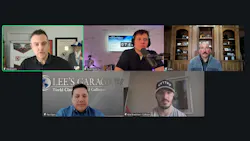
Collision repair shop customers face increasing stress from rising insurance premiums, increasing chances of total loss, and economic struggles. A recent panel discussion pointed to the need for shops to embrace opportunities to aid customers as they navigate the costly decisions of getting their vehicles repaired.
Andy Tylka, Kyle Bradshaw, and Paul Sgro discussed customer pay work during the 7th Annual Positivity Summit on February 6. Hosted by Dave Luehr, founder of Dave Luehr’s Elite Body Shop Solutions, and Ryan Taylor, CEO of Body Shop Booster, the Positivity Summit seeks to provide fresh ideas for the industry each year. This year’s event featured more than 50 shop owners, experts, and industry leaders during the seven-hour virtual event.
Tylka, owner of TAG Auto Group in Indiana, said auto insurance premiums have increased 64% over the past five years and, with policy shopping almost at an all-time high, shops need to ask what they can do to help their customers. Shops can educate customers on options that wouldn’t increase premiums from filing an insurance claim, such as paying out of pocket or financing tools.
“I personally love the financing tool,” Tylka said. “Our customer pay ratio increased 30% just in the past six months, and that's pretty huge because what we're doing is we're introducing the customer to financing. It reduces financial anxiety for the customer. It’s not just pushing debt; it’s reducing that friction between the customer and our body shop and them repairing the car.”
Financing reduces financial anxiety for the customer. It’s not just pushing debt; it’s reducing that friction between the customer and our body shop and them repairing the car. — Andy Tylka, owner of TAG Auto Group
Instead of paying with a credit card, financing is a helpful tool for customers, he said, particularly when additional damage is discovered during repairs that was not part of the initial estimate. Paying with cash or a credit card might be more difficult for an increase in the bill the customer wasn’t prepared for.
“With financing, I like it because the customer gets approved for a certain dollar amount in the beginning. That means it's not as much of a shock when we're increasing the estimate if needed, because they are signing up for spreading out their payments throughout a certain amount of time and it’s not that big of a visual shock to them when there is an increase in the repair,” Tylka said.
Luehr asked about what financing tools the panelists use to help customers get approved or find interest-free options. CCC has partnered with the financial technology company Sunbit to allow repair shops to offer flexible payment options to customers for no additional CCC subscription cost. Tylka said TAG uses Skeps Financing; TAG pays a percentage of each repair, which makes it easier for the customer to get accepted for the financing. Paying the fee also helps the shop negotiate lower interest rates for customers, potentially reducing a 40% or 50% rate down to 15%.
“I know that's kind of the challenge in the industry right now is actually getting customers approved for financing.” Tylka said. “So, with us paying a certain portion of that repair or that fee with the financing company, they're able to open it up a lot more to a lot more potential customers that might not be getting approved normally for it.”
If someone is looking at paying $10,000 or $20,000 out of pocket versus what that's going to do to their premiums over the course of three years, it's just helping them understand really all aspects of it and what all goes into it. — Kyle Bradshaw, director of fixed operations, K&M Collision, Hickory, North Carolina
Bradshaw, director of fixed operations for K&M Collision in Hickory, North Carolina, added that it’s important for shops to know their state’s general statutes and administrative code. In North Carolina, there’s a premium increase cap, and shops can provide that insight to customers.
“So, if it's someone that's looking at paying $10,000 or $20,000 out of pocket versus what that's going to do to their premiums over the course of three years, it's just helping them understand really all aspects of it and what all goes into it,” he said. “As opposed to just saying, ‘Hey, I want to pay this out of pocket,’ and write them an estimate and send them all down the road.’”
Bradshaw said they take a patient, transparent approach. They emphasize to their customers that they are not the cheapest option and explain everything required for a quality repair. He feels potential customers are looking for a personalized experience that shops have trended away from during COVID-19, when work was bountiful and interactions were transactional. Customers are shopping around to find the best price and it’s on the shop to sell the importance of other elements of the repair beyond just the bottom line.
“I think when people hear price-shopping or things like that, it automatically assumes that you need to be competing on price, and we don’t do that,” he said. “[We] kind of lay that out for our customer, explaining the difference in what they're going to get from us and maybe some of the blind spots on if they do go elsewhere, comparing apples to apples, so to speak.”
Sgro, owner of Lee’s Garage in New Jersey, echoed Bradshaw’s emphasis on transparency. He said customers shopping around will ultimately choose the shop that makes them feel the most confident with what they’re going to do and makes them feel they’ve been honest and upfront. He stressed that repairers like himself, Tylka, and Bradshaw are driven by wanting to do the right thing by helping people and providing them with a safe vehicle.
“I think if [customers] see that and they understand that, that's where the value comes in and choosing a facility that's going to do the right thing for them, giving them the right information and the right tools that Andy talked about with the financing and the things that we do to give them those options,” he said. “I think if we give them those options and they can lay it out and look at it, they'll make the right decision that they feel comfortable for their family and their financial situation.”
7th Annual Positivity Summit
(The customer pay segment begins at the 1-minute mark.)
About the Author
 Peter Spotts
Peter Spotts
Associate Editor
Peter Spotts is the associate editor of FenderBender and ABRN. He brings six years of experience working in the newspaper industry and four years editing in Tech. He has a bachelor's degree in journalism from Western New England University with a minor in integrated marketing communications and an MBA. A sci-fi/fantasy fan, his current 2010 Honda Civic is nicknamed Eskel, after the character from the Witcher book series, for the scratch marks on its hood.
Don't miss Peter's next article. Sign up for FenderBender Today's Collision Repair News here.