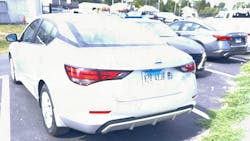
Offering rental cars to customers while their vehicles are being repaired provides a great opportunity to diversify your shop’s business and enter a market that may be underserved in your area.
Dave Dunn, owner of Dave’s Auto Body in Galesburg, Illinois, and founder of Masters School of Autobody Management, says his shop has provided rental services for 40 years. It’s an opportunity to go the extra mile and provide your customers with a best-in-class experience.
“We feel like it's a way for us to manage the entire customer experience and not be relying on a third party that can sometimes let the customer down,” Dunn says.
There’s no one “right way” to provide a rental service, and Dunn says there are a lot of possibilities to make it work for your shop. If your shop is looking into entering the rental game, though, he says there are some key things to keep in mind.
In-house vs. third-party
Dunn says a good place to start when considering offering rental cars is to take a look at the market in your area. If there are gaps in service from third-party providers such as Hertz or Enterprise, offering rentals might be worth looking into.
“Each shop will have to evaluate that as far as is there a pain point or if it’s worth it to them,” he says, “but for most rural markets, I think it's a good way to go assuming you have the cash to get the job done.”
There are a couple of options available to shops when looking to offer rental services. Shops can purchase their own fleet and rent those vehicles directly, which is what Dave’s Auto Body does, or they can contract with a third-party vendor.
Cash flow is an important consideration when making this decision. Dunn says providing rental vehicles to customers is not a huge profit center, and though his shop makes a modest profit from customer rentals, that has come from years of incremental, steady growth and deliberate management of the fleet.
“I approach it more from a customer service and customer experience standpoint,” Dunn says. “When I first started, I had to borrow money to buy the cars.”
Another important factor is deciding if you’re going to rent just to customers who need vehicle repairs, or if anyone can rent a car from your shop. Dunn says his shop only provides rental services to collision customers, which helps keep liability insurance rates lower but also limits the number of potential customers and, in turn, profit.
One way to reduce costs both when starting out and in the long run is to partner with a third-party company. In this instance, Dunn says a provider such as Hertz or Enterprise would leave vehicles on your lot that you would be able to rent out to customers as needed. This reduces the strain on your staff of maintaining and managing the vehicles, and it still provides a high-quality service to your customers.
However, this option greatly reduces potential profit. Dunn also says relying on another company takes some of the control of the customer experience out of your hands as well, which can reflect poorly on you if something goes wrong and the situation isn’t managed well.
“Let's say you've got a car scheduled in on Monday, the rental car is supposed to be there, but for whatever reason the rental car company doesn't show up, you may not be able to start on that car because the customer needs alternate transportation,” he says. “We own ours because for us, again, it's more about managing the customer experience than anything else.”
New vs. used
If you decide owning and maintaining your own fleet is the best route for your shop, Dunn says starting small is best.
His shop has 21 vehicles in its fleet, but starting out that big is a huge investment and is more likely than not to fail. Start with three or four vehicles, and as you learn to manage them effectively and as demand grows, build your fleet from there.
Dunn also strongly recommends buying new cars. There are a number of benefits to buying new, but the biggest reason is making sure the customer is safe.
“You shouldn’t be buying wrecked cars and fixing them to make into your rental offerings,” Dunn says. “You do not want to put your customer out there in a used car that might fail, because that will really blow up the service experience right in your face.”
New cars also come with factory warranties, which makes dealing with routine maintenance and recall notices much more manageable. Dunn’s shop sends rental vehicles back to the dealership for maintenance, which means there’s one less thing for his team to worry about.
And once a vehicle’s warranties are getting close to expiration, Dunn says he and his team are planning to sell it and purchase a newer vehicle for the fleet.
“50,000 miles is a number I like to keep as a target,” he says. “Once a car gets 50,000 on it, I’m thinking about moving it.”
Buying new also allows your shop to establish a working relationship with dealerships in your area, and giving them repeat business will incentivize them to help you out if possible.
“I've found those car dealers will love you more for buying two or three cars a year from them than they will for buying $200,000 or $300,000 of wholesale parts,” he says. “they’re just wired to be cars salespeople.”
Building your fleet
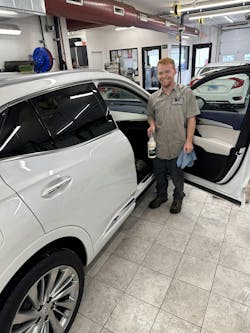
It’s important to understand the needs of your customers when choosing which vehicles to include in your fleet. Dunn says four-door, mid-size sedans are the most common vehicles in his fleet because that’s what customers need, but he does also have a couple of pickup trucks, three-row SUVs and other body types to provide variety.
In addition to the actual fleet, Dunn says it’s important to know how your shop will manage rental bookings. Dunn advises looking into rental car software programs to help with day-to-day management. These software suites manage everything from keeping track of which vehicles are booked and when to oil change and maintenance reminders, and much more.
Once your fleet reaches more than just a few cars, Dunn says in addition to the software, it’s incredibly helpful to have a rental car manager that is incentivized on rental car bookings to manage those operations.
“I definitely recommend you incent somebody in the office who will be handling the rental car paperwork to make sure the cars are out as many days as possible,” Dunn says, “because you don't make any money if your cars are sitting on your lot.”
Rental car offerings won’t be the most lucrative part of your shop’s operations, but if managed effectively, they can drive some revenue. More importantly, they provide a valuable service to customers, and that can help your shop stand out.
About the Author
 Noah Brown
Noah Brown
Noah Brown is a freelance writer and former senior digital editor for 10 Missions Media, where he facilitated multimedia production several of the company's publications.