Isn’t it amazing how much change has taken place and how much disruption is entering the aftermarket over the last three years?
Change and disruption truly challenge individual shop owners and one has to — are you keeping your old and dying business model? Or are you ready to replace it with something young and vibrant?
Not sure which side of the equation you`re on? The below quiz might give you a clue.
- As the owner of your business are you still working in the bays of the business?
- Is your shop understaffed by a minimum of three people; that is one in the bays, one at the front counter and one in the back office?
- Do you look at wages as a “cost” to your business?
- Do you continuously watch total shop sales, always looking for more car count and only feel good when the shop is busy?
- Do you measure mainly sales per RO as the key measurement of improvement?
- Do you like to put on specials and have that seasonal sale?
- Do you attend maybe one or two all-day business management classes every two-three years?
- Do your techs only average 20 to 30 hours of technical training a year and that training is only local location training and always at night?
- Do you inspect the vehicle with the number 1 purpose to find work?
- Do you take, if you are lucky, one week of vacation a year?
- Are you open six days a week?
These are but a few traits of the business model which fit the old and dying shop of the old aftermarket.
On the other hand, the shop owners who have and are working hard to transition to the new aftermarket recognize the new and vibrant (N&V) format that they are embracing. The shop owner is learning that he or she must learn to become a CEO of the business. They have moved themselves out of the bays or front counter, replacing themselves in that position and now working full time on the business.
They recognize that competent staff creates excellent net profits for the shop and they are a true investment into the business.
The N&V shops realigned their staffing levels to have one service advisor per two technicians, two bays/lifts per licensed technician and increased the back-office staff with a dedicated person to work with the bay staff focusing in on managing the client base.
The new management clearly understands that it is not about being busy; it is about being steady. When the shop is steady, the team can execute together with a uniform flow throughout the shop and in total control of the day’s business.
The front counter has been trained to understand many of the shop’s internal numbers and watches the gross profit dollars earned per RO as that comes from productivity, whereas sales per RO measures activity. Activity is “busy” creating top-line sales, whereas productivity creates gross profit and that leads the shop on the way to the right NET profit.
The N&V shop owners have learned the math and how continuous sales and discounts can create destruction to the shop’s bottom line as well as attract the wrong customer/client base.
These N&V owners are now attending six to eight days of business management classes a year to stay on top of the management issues that are continuously changing in a vibrant aftermarket.
They recognize the knowledge of their technicians requires at least 100 hours of development a year and they plan for this continuous development by looking a year out as to what classes they should be attending and plan the shop around that time when one or a few staff members may be away. These owners recognize that the trade days are done and this new aftermarket is truly a highly skilled profession at every level and consequently the development courses the staff will be attending may be in another city in the country.
Vehicle inspections are the critical mass in the business, starting with full comprehensive inspections once a year on every consumer’s vehicles and two comprehensive inspections a year on commercial vehicles. These owners in the N&V aftermarket recognize their service advisors cannot spend effective time with the client and truly counsel them on safety, reliability and efficiency of their vehicle based on how the client uses the vehicle and the client’s expectations of their vehicle if the vehicle file is incomplete. These N&V shops recognize their professional responsibility to the client to counsel them continuously for safety, reliability and efficiency of the client’s vehicle. This is the key point they understand; they don’t have to sell; they have to connect with the client as they are being hired by the client to counsel them.
These new CEOs of the N&V aftermarket go home mentally exhausted at night as they are continuously working on their business for consistent execution to the client base, ensuring internal processes produce consistent experiences for the clients and consistent financial returns for the business. This is why getting away from the business is a must to keep their head clear and creative so they work on making sure they schedule a minimum of four — but preferably six — weeks of holidays a year.
The new CEOs recognize that today’s generation does not live to work, but rather they work to live and therefore family values and time with family and friends are critical to team members maintaining a positive, creative and loyal culture in the company with much reduced stress. The math has been fully studied and they are able to manage the client’s vehicle fully and professionally within a normal five-day-a-week cycle. The team and owners enjoy every weekend and all holidays throughout the year.
The new and vibrant aftermarket is truly exciting, however, it does require change and self-discipline to relearn the business and how to measure and execute to the new format. It has been proven that the average independent shop today is missing between $25,000 and $30,000 net profit per bay per year out of the current business coming through the door. The new and vibrant aftermarket shop owners have learned where it is in their business and how to reset their shop up to go after it. These are the most exciting times to be in this industry today.
So work out the math and define your future if you insist on staying in the old and dying aftermarket because you are destined to stay in the “trade.”
About the Author
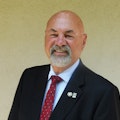
Bob Greenwood
Robert (Bob) Greenwood, AMAM (Accredited Master Automotive Manager) was the President and C.E.O. of Automotive Aftermarket E-Learning Centre Ltd. (AAEC). AAEC is a company focused on providing Business Management Resources and Development for the Independent Sector of the aftermarket industry utilizing the Internet environment. AAEC content and technology is recognized as part of the curriculum of the Fixed Operations Diploma and the Aftermarket Degree courses taken at the Automotive Business School of Canada in Georgian College located in Barrie, Ontario, Canada. This school is the leader and only college in Canada that offers an automotive business education. AAEC is also recognized by the Automotive Management Institute (AMI), located in Colleyville, Texas USA, allowing 80 credits for successful completion of the AAEC E-Learning portion of the site towards the 120 credits required to obtain the reputable Accredited Automotive Manager (AAM) designation. The Automotive Management Institute’s Accredited Automotive Manager designation is the first business management accreditation exclusively for the automotive service professional. To date, AMI various programs have attracted more than 212,000 enrolments throughout North America.
Greenwood died on Sept. 9 in Surrey, British Columbia, Canada, from a heart attack. He was a regular contributor to Motor Age magazine and will be greatly missed. See some of his recent work here:
Where is your shop today: Do you have a career or job culture?
Part one of a three-part series looks at a sample policy manual for your team
How should you measure the real cost of running your business?
A few quick calculations can provide powerful insights into business productivity and profitability.
Shop of the future is becoming reality
Thousands of independent shops will disappear over the next few years, but those that survive will be great businesses. Let's look at what these shops will have done to remain successful.
See more of his articles below.