Collision Advice Helps Shops and Parts Suppliers Get in Sync
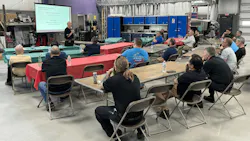
Wholesale parts managers lack a voice in the industry, and margins are shrinking despite increasing sales volume, according to Mike Anderson of Collision Advice (and a FenderBender columnist). He hosts parts managers' strategy meetings at collision repair centers around the country to get parts managers in the room with shop owners and have productive conversations face-to-face.
Two of the biggest concerns shop owners are worrying about are the lack of work and insurance companies that don't want to pay to fix the car properly. Bob McSherry bought North Haven Auto Body in 1997. Since then, he’s tripled the footprint of the shop and expanded to two more locations. Over the last five years, McSherry dropped from 14 DRPs to six, said Anderson during an event at the shop on May 19.
“That is because Bob did not want anybody telling him what kind of parts he should use or how he should run his business fairly,” Anderson said. “So, because of that, Bob has hit some forks in the road where they had to basically part ways, and he has fewer relationships with insurance companies. That doesn't mean he can't fix cars for the people they insure or run into, but that he's not agreeing to pricing concessions for them.”
Most shops in the country use CCC One and order parts through the platform – 64%, according to Collision Advice. Anderson said it’s the number one management system, and parts wholesalers need to make sure they appear when a shop is searching for parts or they won’t make sales.
Anderson also walked the attendees through the process of making sure they appear when a shop searches for parts in CCC. Parts representatives must make sure a shop has selected them as a “preferred vendor” or they won’t show up. In CCC, he looked up different OEMs attending the event to see how they appear to McSherry when he searches for parts. Anderson illustrated how it affects their ability to get parts orders and how they can lose sales from shops across the country due to not being visible in CCC.
“If you don't have a star next to your name, you will never show up and have a chance to quote parts to anybody in CCC,” Anderson said. “You, as a wholesaler, need to make sure that anybody you want to sell wholesale parts to has you set up with a star next to your name.”
Anderson has also been a vocal proponent for the performance of proper safety inspections, which not all shops are doing, and he used the event to prove his point. One example he provided is Subaru’s requirement for every steering column to be removed and measured after an accident; Collision Advice research found that 26-30% of all Subaru steering columns are collapsed after an accident. He asked the attendees how many steering columns they’re selling, and there was little response.
“If you're Subaru, Nissan, Infiniti, GM, or Chrysler and you're not selling steering columns, I would question if the shops you're sending your work to [are] doing safe and proper repairs,” Anderson said. “Every single one of you should also be selling seat belts because they should spot a pretty large percentage of seat belts that are damaged.”
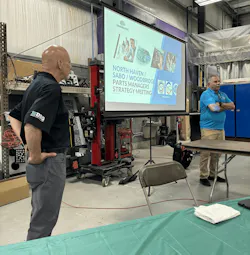
Other examples include Toyota or Lexus airbag and airbag sensor inspections, which are required after any accident. Collision Advice has found about 50% of airbags have broken straps on the backside after inspection. For Honda/Acura dealers, center pillars where the seat belts mount are buckling. The part can’t be repaired, making the vehicle a total loss.
“These are things a lot of shops are not doing,” he said.
The event provided an opportunity to discuss McSherry’s parts return percentage in Fiscal Year 2025 and Q1 of 2026 with the different vendors and share feedback. McSherry found the event valuable for shops and, despite many glowing remarks about how great a customer he is, said they can improve and there’s more work to be done.
“We all get confined in our walls,” McSherry said. “And until you understand what people outside your walls are going through to help you inside your walls, you're never going to get better within your own walls. We have no idea what they're up against, and when you have events like this, they find out what we're up against, and we learn from them, too. So, our parts return percentages, I think they're too high, but I think once we dig into the cause, those numbers drop. I think it's still beyond the level that is to me acceptable and to them is fair.”
About the Author
 Peter Spotts
Peter Spotts
Associate Editor
Peter Spotts is the associate editor of FenderBender and ABRN. He brings six years of experience working in the newspaper industry and four years editing in Tech. He has a bachelor's degree in journalism from Western New England University with a minor in integrated marketing communications and an MBA. A sci-fi/fantasy fan, his current 2010 Honda Civic is nicknamed Eskel, after the character from the Witcher book series, for the scratch marks on its hood.
Don't miss Peter's next article. Sign up for FenderBender Today's Collision Repair News here.