Your Shop is Busy – So Why Aren’t You Making Money?
Key Highlights
- Strong estimating captures the work that needs to be done before production begins.
- Unnecessary vehicle delays quietly increase rental costs, congestion, and lost profit.
- Productivity improves when technicians spend less time waiting and more repairing.
- Small operational leaks can compound into major annual profit losses.
Walk into almost any busy collision center on a Monday morning and it can look like money is being made everywhere. The parking lot is full. Cars are lined up. Estimators are writing sheets. Technicians are working. The phones won’t stop ringing.
From the outside, you’d think business couldn’t be better.
Then somebody looks at the financials.
Where’s the money?
I’ve seen this situation more times than I can count. A shop can produce tremendous sales and still struggle to generate meaningful profit. That’s because being busy and being profitable are two completely different things.
SALES DON’T TELL THE WHOLE STORY
One of the biggest mistakes I see operators make is becoming obsessed with sales.
“How much did we sell this month?”
That’s important — but it’s only part of the story.
I want to know what it cost you to produce those sales. How much labor did you actually capture? How many operations were missed? How much overtime did you pay? How many parts were ordered incorrectly? How many vehicles sat untouched? How many rental days accumulated?
A shop can do $500,000 in monthly sales and still have serious operational problems hiding underneath that number.
Revenue can make you feel successful.
Profit tells you whether you actually are.
IT STARTS WITH THE ESTIMATE
Profitability begins long before a technician touches the vehicle. It begins with understanding exactly what it takes to properly repair that vehicle.
I started estimating when Mitchell books were still on the desk. The tools have changed, but one thing hasn’t:
If you don’t document what you’re doing, you’re probably not getting paid for it.
Estimators and repair planners must understand repairs. What operations are required? What’s not included? What materials are being consumed? What does the OEM procedure require? If your technicians perform work that is not on the repair plan, your shop is giving away labor.
YOUR PARKING LOT ISN’T A BANK ACCOUNT
A parking lot full of damaged cars doesn’t automatically mean money. Sometimes it means the opposite. Every vehicle on your property should have a reason for being there. Waiting for authorization? Parts? An insurance decision? Production?
Vehicles sitting around consume space, create administrative work, increase customer frustration and can contribute to rental costs. The goal isn’t to have the most cars. The goal is to move the right number of vehicles efficiently through a controlled repair process.
STOP CONFUSING ACTIVITY WITH PRODUCTIVITY
Movement doesn’t necessarily mean progress. I’ve walked through shops where everybody looked busy. But when I watched, technicians were walking back and forth, waiting for parts, but very little actual repair work was happening.
That is activity. It isn’t productivity.
Good processes remove obstacles before they reach the technician. Their job is to repair vehicles. Let them repair vehicles.
SMALL LEAKS BECOME BIG NUMBERS
Most shops don’t lose profitability through one gigantic mistake. They bleed it away a little at a time.
A missed operation. A wrong part. Half an hour of downtime. An unnecessary rental day. A comeback. A supplement that should have been identified during blueprinting.
Ten minutes here. Twenty dollars there. Multiply those small leaks across every repair, every employee, every week and every month. Now multiply that by twelve.
Suddenly, those “little things” may be costing your business tens — or even hundreds — of thousands of dollars annually.
KNOW YOUR NUMBERS — BUT KNOW YOUR SHOP TOO
KPIs are important. Financial statements are important. But don’t make the mistake of managing your shop entirely from a computer screen.
Walk the floor. Talk to your technicians. Watch how vehicles move. Look at your parts department. Review repair plans. Find the bottlenecks. Then fix the process, not just the symptom.
The numbers eventually tell you what’s wrong — but the shop floor usually tells you why.
So the next time you see a parking lot overflowing with vehicles, don’t just congratulate yourself. Ask the harder question: We’re busy — but are we profitable?
Because at the end of the day, you don’t deposit “busy” in the bank. You deposit profit.
READY TO BUILD A STRONGER, MORE PROFITABLE COLLISION SHOP?
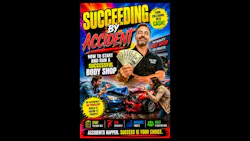
Explore Succeeding by Accident by Matthew “Ghost” Clark and discover proven leadership principles that help shop owners improve culture, increase productivity, and drive sustainable growth.

Author Bio
Matthew “Ghost” Clark is a collision repair industry veteran, author, speaker, and leadership advisor with decades of hands-on experience building and managing successful collision repair operations. Through his book Succeeding by Accident, he helps shop owners develop the leadership skills, operational discipline, and team culture needed to achieve long term success.
Visit www.matthewclark-ghost.com for updates, resources and to pre-order Succeeding by Accident.