Leadership Doesn't Sit Behind a Desk—It Lives on the Shop Floor
Key Highlights
- Leadership failures often create the operational problems shops experience.
- Strong accountability builds consistency, productivity, and team performance.
- Shop culture improves when leaders remain visible and engaged.
- Employees perform best when they understand purpose and expectations.
- Practical leadership strategies can increase profitability and long term growth.
Walk into almost any collision center that's struggling, and you'll hear the same explanations.
"The techs don't care."
"The detail department is behind again."
"The estimators keep making mistakes."
"Nobody wants to work anymore."
I've spent decades in this industry, and I've come to a different conclusion.
The problems in a collision center rarely start with the technicians, detailers, customer service representatives, or estimators.
They start with leadership.
That may be hard to hear, but it's the truth.
One of my favorite sayings is, "If the brain doesn't work, then the body doesn't move." Your shop is no different. Leadership is the brain. Every department is connected to it. When leadership loses direction, accountability, communication, or motivation, the entire organization feels it.
Unfortunately, I've also seen another trend develop over the years.
Most managers today care more about titles than actually getting things done. They're polishing a seat with their butt instead of walking the floor, solving problems, coaching employees, and removing obstacles. Leadership isn't something you wear on a business card. It's something your team experiences every single day.
If you're spending all day in your office wondering why production is slipping, the answer probably isn't sitting in front of a computer screen.
It's standing out in your shop.
I believe leaders need to stop looking for excuses and start delivering results. That begins with accepting responsibility. If your production suffers, own it. If morale is low, own it. If communication is poor, own it.
Great leaders don't ask, "Who's to blame?"
They ask, "What can I do differently?"
Now, accountability is just as important as ownership.
If someone on your team isn't performing, remember this: people can only get away with what you allow them to. Standards must be clear, consistent, and fair. Accountability isn't about creating fear; it's about creating expectations everyone understands.
At the same time, don't forget that every employee is different.
Learn your people.
Some thrive with encouragement. Others need structure. Some are natural leaders waiting for an opportunity, while others simply need someone to believe in them.
I've always found that you get far better results by inspiring people than intimidating them.
When your team understands the mission and believes they're an important part of it, they'll work harder than you ever imagined. Pride replaces excuses. Quality improves. Productivity increases. Culture changes.
People don't just work for paychecks.
They work for purpose.
One thing I always tried to do was roll up my sleeves and stay visible. If the shop needed help, I wasn't afraid to pick up a broom, move vehicles, organize parts, or lend a hand wherever I was needed.
Leadership isn't beneath any job.
In fact, the quickest way to earn respect is to show your team that no task is beneath you.
Here's a little shop humor: if your employees only see you when it's time to hold a meeting or ask why a car isn't finished, don't be surprised if they start referring to you as a "rare sighting."
Be present.
Your team notices.
Finally, let's talk about relationships.
I absolutely believe leaders should be approachable and treat every employee with dignity and respect. Be friendly. Listen. Laugh with your team.
But remember that being friendly and being friends are two very different things.
When managers regularly socialize with employees outside of work, the lines of authority can become blurred. Someday you may have to coach, discipline, write up, or even terminate that employee. Those decisions become much harder when personal friendships cloud professional judgment.
Maintaining professional boundaries protects everyone; including your team.
Collision repair is already a high-pressure business. There's no reason to invite unnecessary drama into the shop.
At the end of the day, great collision centers aren't built by better equipment alone.
They're built by better leaders.
Leaders who serve.
Leaders who inspire.
Leaders who hold themselves accountable before holding everyone else accountable.
Because when the brain works...
The body moves.
And when leadership gets better, the entire shop gets better!
Ready to build a stronger, more profitable collision shop?
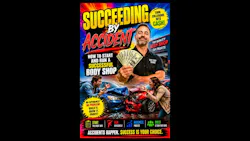
Explore Succeeding by Accident by Matthew “Ghost” Clark and discover proven leadership principles that help shop owners improve culture, increase productivity, and drive sustainable growth.

Author Bio
Matthew “Ghost” Clark is a collision repair industry veteran, author, speaker, and leadership advisor with decades of hands on experience building and managing successful collision repair operations. Through his book Succeeding by Accident, he helps shop owners develop the leadership skills, operational discipline, and team culture needed to achieve long term success. Based on article content and author credentials.