Croel: Are Total Losses Reshaping Collision Repair?
Key Highlights
- Modern vehicles contain complex electronic systems, sensors, and structural components that significantly increase repair costs.
- Insurance companies often declare vehicles as total losses based on economic calculations, not physical irreparability, affecting repair opportunities.
- Customer relationships can be strained when vehicles are totaled, especially if owners owe more than the vehicle's value or face difficulties replacing their cars.
- Industry professionals must focus on educating consumers about repair safety, manufacturer standards, and the true meaning of total loss to foster trust and loyalty.

The same conversation is on a loop in collision shops: An estimate was written and the insurance company totaled it. Weekly, I hear from my collision clients that their average estimate would have been higher — or their car count would have been larger — if the insurance companies didn't turn their estimates into totals.
For many collision repair professionals, that conversation has become increasingly common. Vehicles that once would have filled production schedules for weeks are instead being picked up by salvage carriers and headed to auction. It's easy to understand why many shop owners believe the industry is losing valuable repair opportunities.
The rise in total-loss vehicles certainly affects the profitability of independent collision centers. Collision repair isn't what it was twenty years ago. A damaged bumper once meant replacing a plastic cover, painting it, and reinstalling it. Today, that same bumper may contain radar sensors, ultrasonic parking sensors, cameras, adaptive cruise control equipment, blind-spot monitoring systems, and complex wiring harnesses. Even a relatively minor impact can require diagnostics, software updates, calibrations, and manufacturer-specific repair procedures.
Modern vehicles have become significantly more expensive to repair. It's no longer unusual for a moderate front-end collision to require replacement headlights costing several thousand dollars each, along with radar modules, cooling components, structural parts, and numerous electronic systems. Add labor, paint materials, scanning, calibrations, rental vehicle expenses, and supplements, and repair costs to climb rapidly. As a result, insurers often reach total loss of thresholds much sooner than they did just a decade ago.
From inside a collision repair facility, every total loss represents far more than an insurance decision. It represents production hours that disappear, technicians who lose repair opportunities, paint booth time that sits unused, and mechanical work, refinishing, detailing, and quality control that never happen.
Modern collision repair centers invest heavily in specialized equipment and training. Frame measuring systems, aluminum repair stations, advanced welding equipment, scan tools, calibration equipment, and continuing education require hundreds of thousands of dollars in investment. Those investments are justified when vehicles are repaired. When increasing numbers of repairable looking vehicles are instead declared total losses, recovering those investments becomes increasingly difficult.
Every shop owner understands the frustration of preparing a detailed repair estimate only to receive notice that the vehicle has been declared a total loss before work even begins.
Many consumers assume insurance companies total vehicles simply because repair estimates are too expensive. In reality, the decision is far more complex. Insurers evaluate the complete financial picture, including vehicle value, potential hidden damage, rental costs, storage fees, repair duration, expected supplements, and salvage value.
A vehicle worth $18,000 may require only $11,000 in visible repairs. However, if additional structural damage is likely, rental expenses continue to accumulate, and salvage values remain strong, declaring the vehicle as a total loss may become the most financially responsible decision from the insurer's perspective.
It makes business sense for the insurance carrier but does not make financial sense for the independent.
Ironically, many of the safety improvements that have made today's vehicles safer also contribute to rising total-loss rates. Modern crash structures absorb impact energy more effectively than ever before. These innovations save lives, but they also increase repair complexity. Manufacturers frequently specify replacing structural components rather than repairing them. Sensors require precise calibration. Mixed-material construction demands specialized welding techniques, and OEM repair procedures continue growing more detailed and restrictive.
Repairing vehicles correctly has never required more expertise. Collision repair professionals willingly embrace those standards because customer safety depends on them. Yet the cost of performing repairs properly inevitably pushes more vehicles toward total-loss status.
Loss of Customers and Strain on the Relationship
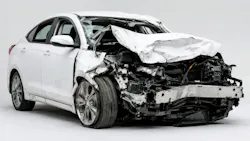
A total loss occurs when the cost to repair a vehicle approaches or exceeds its value. Instead of paying for repairs, the insurance company typically offers the vehicle's actual cash value or the estimated market value immediately before the accident. For many drivers, however, that amount falls short of what it costs to purchase a similar replacement vehicle in today's market.
I want to add this side note, that new and returning customers may have been driven to your shop based on the marketing dollars spent by the shop owner.
The financial impact can be especially difficult for people who still owe money on an auto loan. If the insurance settlement is less than the remaining loan balance, the owner may be responsible for paying the difference unless they purchase gap insurance. This can leave consumers making payments on a vehicle they no longer own.
Replacing a totaled vehicle can also be stressful. Rising vehicle prices, limited inventory, and higher interest rates may make it difficult to find a comparable car within the insurance settlement amount. Additional expenses such as taxes, registration fees, and insurance premiums can further increase the cost of replacing a vehicle.
Beyond financial concerns, there is often an emotional aspect. Many people develop sentimental attachments to their vehicles or have invested in aftermarket upgrades that may not be fully reflected in the settlement value. Even when compensation is fair according to insurance guidelines, consumers may still feel that they have lost something that cannot easily be replaced.
Who do the customers blame? The person delivering the news, your shop. The relationship is now strained between the independent collision shop and the new or returning customer out of fear of something being done wrong to make the insurance company decide to total the vehicle.
As I tell my clients, education is the best weapon you have against insurance companies.
Another often-overlooked part of the total-loss conversation is consumer education. Many vehicle owners mistakenly believe that a total loss means their vehicle cannot be repaired. In most cases, that's simply not true. A total loss means the repair no longer makes economic sense under the insurance company's calculations, not that the vehicle is physically beyond repair.
Many totaled vehicles remain structurally repairable, while others become valuable donor vehicles that supply recycled OEM parts used to safely repair countless additional vehicles.
Consumers also deserve a better understanding of proper repair procedures. Choosing the lowest repair cost isn't always choosing the safest repair. Collision repair professionals have a responsibility to explain why following manufacturer procedures matter and why proper repairs continue protecting families long after the accident is forgotten. As I tell my clients, education is the best weapon you have against insurance companies.
Ways to Benefit from a Total Loss
When a damaged vehicle arrives at a collision shop, technicians inspect the damage, document repairs, and often disassemble portions of the vehicle so insurance adjusters can accurately estimate repair costs. Even if the insurer ultimately declares the vehicle a total loss, the shop is generally paid for legitimate work already performed, such as diagnostics, teardown, and estimating.
Collision shops may also receive revenue from services surrounding the total-loss process.
- Towing the vehicle from the accident scene.
- Charging storage fees while the claim is being resolved.
- Preparing the vehicle for transfer to a salvage auction.
Summary
Collision repair has quietly become one of the most technologically advanced skilled trades in the automotive industry, yet public perception hasn't always kept pace. Many people still picture body repair as hammering dents and applying filler. In reality, today's collision centers often resemble engineering facilities.
Technicians analyze damaged structures with computerized measuring systems. Estimators interpret manufacturer repair documentation that can span hundreds of pages. Refinish technicians work with increasingly sophisticated paint technologies, while calibration specialists verify that advanced driver-assistance systems function exactly as designed. Every successful repair requires coordination among highly trained professionals.
Will total loss rates continue rising? Probably. Vehicle technology will continue advancing, repair costs will likely increase, replacement parts will remain expensive, and insurers will continue making financially driven decisions. Those realities are unlikely to change.
What won't change is the need for highly skilled collision repair professionals. Millions of accidents each year still require structural restoration, refinishing, diagnostics, calibrations, and quality assurance performed according to manufacturer standards. The work isn't disappearing but instead is becoming more technical, more specialized, and more valuable.
From the perspective of a collision repair business, the increase in total losses is undeniably frustrating. Every vehicle declared a total loss represents work that could have supported employees, generated revenue, and served customers. It can feel as though opportunities are disappearing before they ever reach the shop floor.
The shops that continue investing in education, embracing manufacturer repair standards, developing expertise in advanced vehicle technologies, and educating consumers about proper repairs will remain the industry's leaders.
Ultimately, success will depend less on the number of vehicles entering the shop and more on the quality, complexity, and professionalism of the repairs performed.
Educating your customers and sympathizing with their loss and learning how to navigate your own loss is component of this process. Collision repair has never been about fixing metal alone. It has always been about restoring safety, preserving value, and returning families to the road with confidence.
Combating the reverberating loss of total losses will be determined by how well the industry continues to adapt, innovate, and demonstrate the indispensable value of repairing today's increasingly sophisticated automobiles.
About the Author
 Cassaundra Croel
Cassaundra Croel
Professional and Program Development Manager
Cassaundra Croel brings 18+ years of consulting and project management experience to DRIVE. Educated in Management and Political Economics from Denver University and UC Berkeley respectively, Cassey has been able to apply her training to sports, real estate and consulting and business development at DRIVE.