The New Reality of Work Acquisition in Collision Repair
For years, collision centers operated in a predictable ecosystem. Claims were filed, assignments were made, and work arrived with minimal effort. Shops didn’t have to hunt or fish for survival; they simply had to be ready. They were eating from a stocked pond, and someone else baited the hook.
That era has ended.
Across the industry, claim dynamics have shifted in ways that demand a new posture. The once steady flow of inbound work has fractured. Consumers hesitate to file claims. Insurers scrutinize more closely. And shops that continue relying solely on websites, SEO, or passive digital traffic are discovering that the old playbook no longer fills the schedule.
To thrive in today’s environment, collision centers must move from passive receivers of work to active seekers of opportunity. This requires a mindset shift, one that feels unfamiliar to many operators who built their businesses during a different time. But the shops that adapt will be the ones that lead the next era of growth.
The Hidden Market Sitting in Service Lanes
One of the most promising opportunities in this new landscape is the vast pool of unreported and unrepaired damage. These are vehicles with dents, scrapes, and collision‑level impact that never make it to a body shop. And the most fertile ground for finding them is not the insurer; it’s the dealership service lane.
Vehicles five years old or newer, the sweet spot for profitable repair, return to dealerships regularly for warranty work, extended service plans, and routine maintenance. They show up every day, in every market, already in the hands of professionals who can see the damage but are not equipped to act on it.
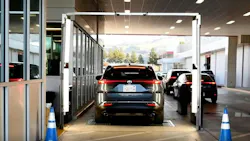
Recently, I partnered with a company to evaluate real service lane activity across several franchise dealerships. Over two days, more than 200 vehicles were photographed and assessed using an AI‑driven estimating platform. The process took less than two minutes per vehicle and fit seamlessly into the standard walk‑around inspection.
The results were eye‑opening:
• 33% of vehicles had damage beyond minor chips and scratches.
• The average repair order exceeded $3,000, with some surpassing $5,000.
These are not hypothetical numbers. They represent real customers, real vehicles, and real revenue. Revenue that is currently slipping through the industry’s fingers.
Why Customers Aren’t Repairing the Damage
When asked why the damage hadn’t been addressed, customers gave reasons that reveal a deeper truth about today’s claim environment:
1. The vehicle was drivable, so the repair didn’t feel urgent.
2. They feared that visiting a collision center would automatically trigger a claim.
3. They were unsure about out‑of‑pocket costs and potential premium increases.
In short, the barrier isn’t the damage; it’s the uncertainty.
Consumers want clarity. They want privacy. And increasingly, they want to compare repair cost vs. claim cost before deciding. If filing a claim means paying a $1,000 deductible plus $75 more per month for three years (a $2,700 premium penalty) many customers would rather pay out of pocket or explore financing options.
Collision repair centers can meet this need by providing information, not pressure.
Privacy Matters, and Technology Must Respect It
The AI platform used in the evaluation is not connected to any system that aggregates detailed repair‑order data. It does not feed insurers. It does not create a claim. It simply informs the customer.
That distinction matters.
The goal is not to write a final repair plan. It is to open a conversation, one that empowers the customer and creates an opportunity for the shop.
The Volume Is Already There
Consider the scale:
- A typical dealership service lane processes 50 to 100 vehicles per day.
- Quick‑lube centers see similar volume.
- Automated car wash businesses see between 50 to 400 vehicles each day.
Even with modest conversion rates, the math is compelling. A single partnership could generate a steady flow of new work, not by waiting for claims, but by meeting customers where they already are.
This is the future of work acquisition: mutually beneficial partnerships, proactive engagement, and a willingness to rethink the boundaries of the collision repair business model.
The shops that embrace this shift will not just survive the industry’s changing dynamics; they will define the next chapter.
Related reading
About the Author
 Ted Williams
Ted Williams
Collision Industry Strategist and Consultant
Ted Williams is a collision repair industry strategist and consultant with decades of experience working globally across OEMs, dealerships, MSOs, and independent repair centers. His work focuses on collision lifecycle ownership, customer retention, and sustainable growth models aligned with trust and repair quality.