Williams: Capturing Work Outside the Claim

Rising premiums and increased out-of-pocket costs have led to fewer insurance claims. By adopting AI-based estimating and forming strategic partnerships with dealerships, quick lube centers, and detail shops, collision repairers can tap into the substantial volume of cosmetic and light collision work that currently goes unclaimed.

Key Highlights

  • Consumers are increasingly paying out-of-pocket for repairs due to higher deductibles and fear of premium hikes, reducing insurance claim frequency.
  • Vehicles over seven years old are often declared total losses, while newer vehicles frequently return to dealerships for warranty and maintenance services.
  • Most collision repair work for newer vehicles occurs at dealerships and light repair shops, but many shops are not capturing this business effectively.
  • AI-driven estimating tools enable quick, accurate visual assessments, facilitating faster customer engagement and better repair planning.
  • Partnerships between collision centers, dealerships, quick lube centers, and detail shops can create new revenue streams through referrals and shared services.

The automotive insurance landscape has fundamentally shifted. It is no longer designed to make consumers whole; it is designed to protect them within written policy limits. This shift is reshaping consumer behavior, and, in turn, the collision repair industry. 

Claim reluctance, driven by rising premiums, is pushing consumers toward higher deductibles and lower coverage limits. This has created two major behavioral shifts: 

  1. Balance Billing Awareness — Consumers increasingly are expected to pay out-of-pocket for coverage gaps, like health insurance.¹
  2. Premium Penalty Fear — Many understand that filing a claim will trigger future premium hikes.² 

As a result, consumers are avoiding insurance claims for drivable damage — either paying for repairs themselves or skipping repairs entirely. 

But these vehicles still need attention. 

Where These Cars Go 

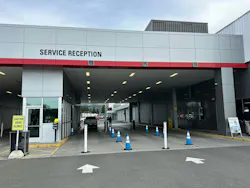
“They go to auto dealer service lanes.” 

Industry data confirms: 

  • Vehicles older than seven years become total losses 70% of the time.³ 
  • The ideal repairable vehicle is five years old or newer.⁴ 
  • 65% of newer vehicles return to dealerships for service due to warranties or maintenance plans.⁵ 
  • Only 35% of dealers operate collision centers.6. 

Yet most dealerships only document preexisting damage for liability; they do not act on it. 

The Opportunity: Cosmetic and Light Collision Repair 

How much work exists? More than most shops are capturing today. 

With the right technology and process, collision centers can partner with dealerships to capture this overlooked business. AIbased estimating tools now: 

  • Produce quick, visual estimates 
  • Have improved accuracy on light repairs 
  • Establish initial conversations that lead to heavier severities 
  • Engage customers with transparency and speed 

This model extends beyond dealerships to: 

  • Quick lube centers 
  • Car washes 
  • Detail shops 

The key is establishing a mutual exchange of value — referrals, enhanced customer service, or shared revenue. 

Takeaway 

There is significantly more repairable work in your market than what enters the insurance system. Shops that activate these channels will build a stronger, more predictable pipeline. 


FOOTNOTES 

  1. Federal Reserve, Consumer Finance Report, 2025.

  2. LexisNexis Risk Solutions, Auto Insurance Trends, 2025.

  3. CCC Intelligent Solutions, Crash Course 2025, Total Loss Analysis.

  4. S&P Global Mobility, U.S. Fleet Age Study, 2025.

  5. OEM Warranty & Service Retention Reports (Toyota, Honda, Ford), 2024–2025.

  6. NADA Data 


Related Reading: Are AI and Robotics in Your Shop's Future?


About the Author

Ted Williams

Ted Williams

Collision Industry Strategist and Consultant

Ted Williams is a collision-industry strategist and consultant with decades of experience working globally across OEMs, dealerships, MSOs, and independent repair centers. His work focuses on collision lifecycle ownership, customer retention, and sustainable growth models aligned with trust and repair quality. 

Sign up for our eNewsletters
Get the latest news and updates