Batenhorst: A Call to Action to OEMs for Their Certified Collision Networks
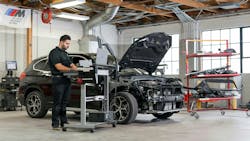
An open letter to any OEM with a certified collision program:
Human nature dictates that we will take the path of least resistance through any endeavor. To the dismay of civil engineers, this is evident when you see people using a shortcut through a park that has a walkway that takes people a long way around something. I fear that this same mentality is beginning to permeate almost every OEM certification program in the United States. My objective is not to inflame or complain, but rather to awaken and enlighten my OEM peers. I have had the privilege of working in OEM-certified collision shops for my entire career. I’ve had experience with most of the large-scale certification programs currently available, but naming specific OEMs is not necessary, as the issues below affect all of them.
Many OEM networks have sought extensive growth, which in some markets ends up lowering the standard of those who can enter the network if there are not enough top-caliber shops to fit that need. The process of vetting a shop in many cases is then expedited, and this gives opportunities to shops to falsely present themselves with being ready to be certified. Some programs provide provisional certification with the shop “promising” to fulfill training and tooling requirements later. They essentially get their foot in the door and then kick that can down the road as long as possible until they are forced to complete the requirements or risk being removed from the program (which is oftentimes years later).
In any business, audits are a great tool to ensure that processes are followed. But as OEM networks swell in size, additional infrastructure is needed to be able to conduct proper audits. Some OEMs do these audits in person (by either an employee of the OEM or a third-party company), while others prefer virtual audits. However, I am not aware of any OEM performing more than one audit a year. This is completely insufficient, and many shops take advantage of this system. Feverishly cleaning the shop, shuttling equipment around and cherry- picking which ROs to show the auditor they comply to the OEM standards are some of the many manipulations used by shops prior to an audit. Once the auditor leaves, they relax and go back to doing what they did before. I have personally experienced auditors coming to my facilities over the past 10-plus years that spend zero time looking at actual repair quality and repair orders and go straight to validating equipment and training before leaving.
It’s frustrating and disappointing to see that I am holding my team to a tighter standard than the OEMs do. When upholding OEM network requirements, I feel like I am fighting to forge a new trail with only a handful of other like-minded shops. I routinely hear of certified shops not performing safety inspections, not using 100% OEM parts, and omitting required non-included repair operations to avoid fighting with insurance companies. Should they be enjoying the benefits that come with the plaque on the wall? I can pull up a Tableau report from CCC and see a network average of 90% OEM parts usage. If the contract you signed states 100% OEM parts, that’s what you must use. Many of us have figured out how to maintain that standard even in the face of insurers paying for alternative parts. Why would anything less be tolerated?
OEMs: The bar needs to rise substantially. Audits need to be more stringent, repair quality must be checked routinely and frequently, and the standard of excellence must be upheld. Increase your staff, properly train them on your standards, adjust your infrastructure, and be more selective about who joins your networks. Should you choose to ignore this, sit back and watch your program destroy your brand’s values and dilute the network into nothing more than background noise, which people largely ignore. It’s already happening, but it’s not too late to turn it around.
About the Author
Andrew Batenhorst
Andrew Batenhorst is the body shop manager for Pacific BMW Collision Center. He has worked in the automotive industry for the past 25 years and currently sits on the SCRS board as the director-at-large. He also is the Glendale/Foothill Chapter president for the California Autobody Association. He has a bachelor's degree in business administration from Cal State Northridge. Connect with him on LinkedIn.