Enhancing Customer Service in Collision Repair Shops: Building Trust and Confidence
Key Highlights
- Customer service quality can make or break a collision repair shop's reputation and sales.
- Empathy, industry knowledge, and personality awareness are key traits for front desk staff to effectively serve customers.
- Proper training and ongoing support for customer service reps help create positive first impressions and foster customer trust.
- Many shops neglect formal customer service training, relying instead on trial-and-error, which can lead to poor customer experiences.
- A professional, informative website is an extension of customer service and should be regularly reviewed and updated to reflect industry expertise.

Put yourself in the place of a potential customer. They’ve just had a wreck. Their car is damaged, they’re upset, and they need help.
Then they walk through your door or call to see if you can fix their car. And this is where your business slips into the driver’s seat. So, how are you going to make sure that a potential customer’s first contact with your business gives them a good vibe, instills confidence, provides comfort, and helps them trust you with their car repair?
Here’s the key.
The Backstory
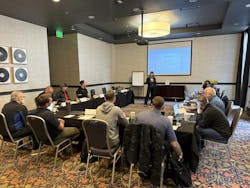
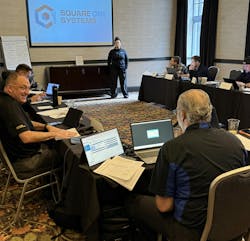
“Customer service will make or break your business,” states Kristen Henry, St. Louis-based director of training and development at Square One Systems, a sister company of Certified Collision Group. Square One offers industry-specific training opportunities and programs for collision repair employees and owners.
The customer service representative at your front desk or answering your phone holds a lot of sway, Henry stresses. She knows, because sometimes she and her boss, Erin Solis, senior vice president of operations, randomly call the shops that come to Square One Systems for training.
“There are moments when we get on the phone, and people don’t know what’s going on,” she says. “They’re not empathetic, they don’t know their business, and we may have the instinct to hang up and call somebody else right away. And the same situation can apply if you walk into that facility.”
The Challenge
It’s important to make sure your customer service representatives are well trained, because they’re usually your shop’s first point of contact with potential customers.
“In the collision industry, if an estimate and repair are performed properly, there’s not a lot of competition on pricing,” Henry notes. “So really, it is your people that are going to determine if you get a sale.”
She continues, “Your No. 1 differentiator from your competitors is how you present yourself and how you can take the best care of the customer and sell the job. So, it can really make a huge impact on your business.”
The Solution
How do you make a good first impression? The question seems simple enough, but oftentimes collision repair shops are more focused on the behind-the-scenes repairs than what happens on the front end of the business.
The key here is having someone out front answering the phone who has the ability to put themselves in the customers’ shoes.
“The first thing is to make [the potential customer] feel good when they walk in or call, because that is not a call anybody wants to have to make, right?” Henry says. “That potential customer could be calling you from the side of the road right after the accident happens. So, empathy and welcoming and understanding them is the first thing that’s important. And knowing they’ve just been in an accident.”
Next to being empathetic, the second most important thing for a front-facing customer service representative (or receptionist) to possess is education.
“Know what you’re talking about,” as Henry puts it. “If you’re empathetic and you’re educated in how to communicate with them — using analogies or terms that they’ll understand instead of just very rigid industry-specific terms — you’ll get on their level.”
Right here is where it becomes important for a customer service rep to be able to read people.
“You may not think personality profiling is a big thing, but understanding where a customer is mentally is so important—are they in a hurry and don’t need or want details, or do they prefer that more time, information and data be shared with them? Your rep must have the ability to understand the needs of each customer individually and help them get through it in the best way for that client,” Henry explains.
Along with being attuned to customers’ needs, your front-end rep needs to have the ability to make the customer feel confident that their vehicle will be safe for their family members and kids when they get it back—that it will hold up structurally, meets OEM standards, and will run right.
Your customer service representative also needs to understand legalities, get signatures on the work, and communicate about who’s paying the bill.
“Having a rep that can do these things is going to set you apart from anybody else,” Henry says.

The Aftermath
While most collision repair shop owners would agree that customer service training is critically important, that doesn’t mean they have programs in place to provide that training.
Oftentimes, according to Henry, customer service rep training is trial by fire. They get thrown into the mix at the shop because everyone is busy, and management hopes to give them some training when things slow down a bit.
“Most shops don’t have team training, which is what Erin and I provide,” Henry says.
A lot of times what happens instead is that new customer service hires will sit with someone for a few days, observe them, and then just jump in.
“We recently made a ghost call [to the collision repair shop of someone in our training course], and the girl at the front desk was new,” Henry says. “Every few seconds she was saying, ‘Let me put you on hold.’ But she wasn’t explaining to me that she was getting answers to my questions while I was waiting.”
Henry says this situation highlighted how much Square One Systems’ training could’ve helped the situation and made sure a customer would feel good on the other end of the line.
“This is a great learning opportunity,” she notes. “We could teach her to say, ‘Bear with me, and I’ll get with my colleague here and have a conversation.’ I think that would’ve gone better, and a caller would’ve understood what was happening and why they were being put on hold again and again.”
Henry adds, “That’s why we offer classes, coaching, and support.”
The Takeaway
Having a regimented training opportunity for customer service reps and other employees can make the difference between customers staying at your shop or going elsewhere. And according to Henry, the right training course will give employees refreshers from time to time as well and someone to reach out to for support along the way.
As a trainer, she says she keeps herself fresh by talking to her husband, who knows nothing about cars.
“He’s a great guinea pig for me to talk to and make sure I’m saying things in a way that he’ll understand, since he has no knowledge of the automotive industry at all.”
A final point Henry makes for collision repair shop owners is that their website is also an extension of their customer service offerings. “I took a poll in one of our training classes, and I asked [owners] to raise their hands if they’d looked at their website in the past year, and nobody put their hand up. They said they paid people for that.”
Henry continues, “It kills me, because the website people are experts in web design, but we’re the experts in our industry.”
And as experts, she says, shop owners owe it to themselves — and to their bottom line — to make sure their customer service people are trained correctly.
About the Author
 Carol Badaracco Padgett
Carol Badaracco Padgett
Carol Badaracco Padgett is an Atlanta-based writer and FenderBender freelance contributor who covers the automotive industry, film and television, architectural design, and other topics for media outlets nationwide. A FOLIO: Eddie Award-winning editor, writer, and copywriter, she is a graduate of the University of Missouri School of Journalism and holds a Master of Arts in communication from Mizzou’s College of Arts & Science.