New Sunroof Technology Improves EV Performance

Eastman launched Saflex Evoca XIR.SR, a next‑generation infrared (IR)‑reflective interlayer developed specifically for sunroofs in electric vehicles.
Building on the 30‑year XIR legacy, Eastman created the Evoca XIR.SR interlayer to reduce solar heat gain and offer a neutral, angle‑stable reflected color. Engineered to keep vehicle cabins comfortable, the new interlayer helps reduce HVAC load and improve battery and range efficiency. Evoca XIR.SR is now available globally.
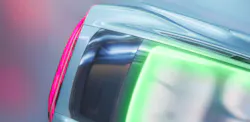
As EV interiors bring seats closer to sunroofs, occupants experience higher solar and thermal loads. Evoca XIR.SR reflects IR rays to lower total solar energy transmittance (TTS) to help keep the cabin cooler and improve passenger comfort. The interlayer preserves optical clarity while delivering an angle‑stable, neutral‑gray reflection that eliminates the blue hue common in metal-coated glass. It offers design freedom for visible light transmission, haze, and TTS to help designers balance daylighting, appearance, and solar control.
“Developed alongside OEMs and laminators and validated across multiple sites, Saflex Evoca XIR.SR was engineered to deliver consistent color neutrality, support higher solar transmittance and eliminate optical defects like orange peel and wrinkling,” said Oliver Osborne, Eastman's global commercial director of automotive interlayers. “Evoca XIR.SR offers consistent, top‑tier solar performance and appearance for laminators, so OEMs can rely on repeatable quality.”
Key features and benefits of Saflex Evoca XIR.SR for panoramic sunroofs.
- Comfort — Lower solar heat gain to help keep cabins cooler and improve occupant comfort
- Design flexibility — Supports flexible glass configurations while maintaining a consistent, neutral reflected color across glass types and viewing angles
- Efficiency — Lowers TTS through the IR-reflective technology, helping ease HVAC load and supporting better range performance; actual range impact varies with driving profile, climate and usage
- Manufacturability and supply chain advantages — Offers an IR‑reflective alternative where metal‑coated glass is not feasible, giving automotive glass suppliers a high‑performance option that meets OEM requirements
For more information, click here.