Autonomous Driving: What is ADAS Sensor Fusion?
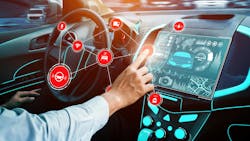
Advanced Driver Assistance Systems and autonomous driving technologies have been gaining widespread adoption in recent years. A blog from Car ADAS Solutions explores the concept of sensor fusion and how it works.
Sensor fusion is the process of combining data from multiple sensors to create a more accurate understanding of the environment. It takes data from different sensors and combines them to perceive the environment accurately and make informed decisions.
Sensors can include cameras, radar, lidar, and ultrasonic sensors, all working together to provide a 360-degree view and enable features such as collision avoidance, adaptive cruise control, and lane departure warning systems.
The data the sensors collect is shared with a central processing unit that uses sensor fusion algorithms to create a comprehensive and accurate picture of the environment. For instance, while cameras are adept at classifying objects, they may struggle to estimate distance, especially in poor lighting conditions. Lidar and radar sensors excel at distance estimation and complement the camera images.
How Sensor Fusion Will Enhance Autonomous Driving
The seamless communication between sensors is crucial for the safety and efficiency of autonomous driving. If the sensor fusion technology is not sophisticated enough, it can lead to misinterpretation of data and sensors individually identifying objects instead of working together. This can lead to obvious problems in autonomous driving, such as collisions and accidents.
Autonomous driving systems use four steps to process and fuse the sensor data and make informed decisions:
- Detect: The sensor types listed above are used to monitor and analyze the external environment.
- Segment: All of the data that is retrieved from the sensors is then segmented into groups based on like factors. For example, multiple sensors might identify an object as a pedestrian, and all that data would be grouped together.
- Classify: This step uses the segmented data to classify objects and decide whether they are relevant to the drive. This can range from identifying objects that impede the vehicle’s path to recognizing traffic signs and signals.
- Monitor: Once the objects are classified, the system then monitors these objects for the entire drive and tracks their movements. This allows the system to assess the road and take necessary actions in real time.
The Future of ADAS Sensor Fusion
Further progress in lidar, radar, and camera technology will likely enable even more detailed environmental perception. The development of Vehicle to Everything technology, where vehicles can communicate with everything around them will add another layer to sensor fusion. This will give the ADAS an even more holistic understanding of its surroundings, increasing safety.
As technology advances, it will require more processing power and more powerful on-board computing systems to interpret the sensor data in real-time. Standardizing sensor fusion tech across platforms is also crucial for ADAS development.
To read the full post from Car ADAS Solutions, click here.