Achieving flawless results with challenging OEM multi-stage automotive colors
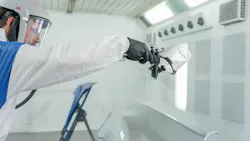
One of the more recent trends in automotive refinishing has been unique and vibrant OEM multi-stage colors. Mazda 46G, 46V, and 51K are some examples of such colors, but they aren’t the only ones giving painters difficulty.
These new colors often require new toners, reducers, and equipment. They also require new techniques to achieve an invisible repair. With consideration for prepping, mixing, flash times, sprayouts and application of products, here’s what painters may consider when spraying these challenging colors to achieve successful results.
Prepping
Prepping panels — especially the blend panels — is just as important as spraying them. Many of the new colors have extremely fine metallics in them. This can cause a couple of issues.
Fine metallics will follow the contours of sand scratches if not refined properly, and you will see every scratch. Most specialty colors that include ultra fine metallics, colored metallics or special pearls will have a technical data sheet that cover painting that specific paint code. The paint manufacturer may also have a TDS specific to the toner itself, which would provide rules to follow when any formula includes that toner. Every manufacturer has a specific grit to finish panels, so double check them before you start the job. The grit recommendations, depending on the manufacturer, can go as fine as 3000-grit on blend areas.
Another common issue when dealing with very fine metallic toners is that metallics will generally follow the contours of the texture underneath them - so if you don’t flatten the blend areas or sealer edges out sufficiently, it may show texture under the basecoat.
One other important tip when prepping these delicate blend panels is to skip the scuff pads. Scuff pads are usually acceptable for prepping blend panel edges, but when you’re dealing with these fine metallics, the inconsistencies in scratches from scuff pads may cause a problem. If you are using a fresh pad with moderate to heavy pressure, you may leave some aggressive scratches (even with a gray pad), so it’s best not to use them. It’s best practice to hand-sand edges with the appropriate grit sandpaper before machine sanding the main part of the panels.
Sprayouts
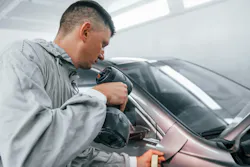
Because of their complexities, many of these new colors can vary significantly from year-to-year and model-to-model. So even if you have an existing sprayout or two, chances are you’ll need to do some work matching the color. Of course, a previous sprayout is the best start, but if you don’t have one that matches, you’ll have to use your camera and/or variant chips if available. If you’re using a camera, make sure to use both compound and polish on the part of the car where you’re doing a camera reading. The better the preparation of the area for a camera read, the better the camera reading will be. Don’t forget to clean off the buffing residue with a cleaner or inspection spray, as that can also cause a poor camera reading.
This is an instance where it may be best to include both the manufacturer and the paint code with the camera read, rather than just doing an open search without parameters. Of course, spraying out the camera-selected color is necessary to verify the color. If you do have variant chips available, and one of them looks like an acceptable match, it’s still best practice to conduct a spray-out to verify that the color matches the chip.
When it’s time to make your sprayouts, you will need to make sure you’re doing them properly. Taping a sprayout to a paint stick and holding it at arm’s length isn’t going to cut it. Instead, consider taping it to a large piece of masking paper on the booth wall, or to cardboard on a stand and setting it up vertically for spraying.
Spray a larger area than the card to get an even application of material, which is even more important when spraying mid coats in three and four stage paint jobs. Each coat of mid-coat will need its own card. Making a letdown panel on a single card doesn’t give you a large enough sample to properly judge the amount of mid coat needed. When making these cards, it is essential to follow the flash times, mix ratios, and application methods exactly to the letter according to the special TDS. Don’t rush this part, as any cut corners can lead to inaccurate test panels which could cost you later when you have the vehicle in the booth.
When you are selecting a color, try to lean toward newer formulas that have newly released toners if possible. Paint companies are only going to make a new toner if they can’t make it work with existing toners, so get the new toners and use them.
Equipment
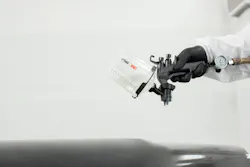
Using the proper equipment to tackle new colors is important too: certain colors have a recommended fluid tip size, and that will vary depending on the paint manufacturer. If a TDS calls for a 1.1 fluid tip, use it. When a paint company recommends a certain size, it’s because it gives you the best chance of success in getting tricky metallics to lay down similarly to the way they are laid down from the factory. Dialing back a spray gun with a larger fluid tip isn’t the same as using the proper size. If you don’t spray these colors often, reach out to your distributor technicians or your paint manufacturer’s technicians and see if they have a loaner gun with the proper tip size.
Now that you have the color chosen and a proper spray gun setup, it’s time to spray the vehicle. The first thing to do is to review the TDS again to make sure you follow the proper procedure during the painting process. Pay special attention to the recommended reduction, as often these tough colors will require a special, more diluted reduction. For example, some 46G formulas require a black basecoat to be applied under the mid coat, while others require a black sealer. If sealer is to be applied, make sure you refine it to the recommended grit after it’s dried to avoid any sand scratch marks that could show after the basecoat is applied.
Many versions of that color will require a smaller fluid tip with over-reduced mid coat and need to be sprayed as a thin mist coat. They are often sprayed in a crisscross pattern to avoid striping. The thin mist coat helps the metallics in that color to lay flat to avoid looking too coarse on the face and the sidetone. Mazda’s 46V is another color that sometimes requires thin mist coats before the tint coat.
Flash Times
It’s extremely important on both of those colors to observe the recommended flash times to keep the flake lying properly. If you spray the next layer before the mist coats are fully dried, you risk moving the metallics and making the mid coat coarse and blotchy. The same goes for the tinted mid coat on 46V.
Mazda’s Rhodium White, or 51K, is generally the easiest of the three. This white tri-coat has a small amount of special metallic and pearl in the mid coat. The ground is sprayed like a traditional three stage ground coat, but the mid has similar flake, so the mid coat application is similar. Again, it’s generally light mist coats of over-reduced mid. If it starts to look blotchy, you’re probably spraying the mid coat too wet. Raising your gun speed and tightening your overlap at the recommended distance will help to keep the flake even across large panels. Make sure to wait the required flash times before applying clear.
Once you spray a few of these colors, they’re not so intimidating. Keep in mind they will usually take much longer than a traditional paint job, so factor that in when planning your booth schedule for the day. Also, don’t be afraid to ask for more blend room. If it’s even in question, blend the next panel.
Finally, take your time. Follow your TDS for flash times and don’t rush. Having a redo on one of these jobs can be devastating for production, so make sure you get it right the first time. Once you get more familiar with these more challenging colors, it may be easier for you to enter the booth with confidence and feel positive that your paint job will turn out great.
About the Author

Troy Knopik
Troy Knopik is a lead refinish trainer at 3M Collision's Skills Development Center. Troy has been in the collision industry for over 35 years. He spent 25 years as a production painter before becoming a paint manufacturer representative for BASF. He trains painters across the country on all aspects of the collision repair process.

Michael Nelson
Refinish Trainer
Michael Nelson is a refinish trainer at the 3M Skills Development Center. Michael has served the collision industry for 29 years. He previously held production painter and product specialist roles for Finishmaster and Axalta Coating Systems. He trains painters and preppers from across the country on all aspects of the collision repair process.