Mastering Paint Shop Workflow: Tips for Cleanliness, Organization, and Speed
Key Highlights
- Ensure all work zones are well-lit and organized to prevent missed details and rework.
- Use carts, racks, and labeled storage to keep supplies and parts accessible and off the floor.
- Implement a dedicated, clean masking and sanding area, and utilize vacuum systems to reduce dust and improve safety.
- Schedule daily meetings and create detailed booth schedules to coordinate work and minimize downtime.
- Maintain an organized mix room with calibrated scales and a clear sprayout library to ensure accurate color matching and efficient workflow.
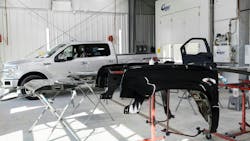
Successful and productive shops often have a paint area that is efficient, organized, and clean. Here are some strategies to help get your paint shop running productively, so you can put out quality work as efficiently as possible.
Provide clean and organized workspaces
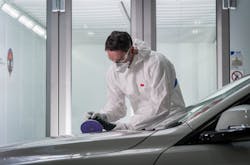
The first aspect of a successful paint area is having a clean and organized space outside the booth where cars are prepped and booth loads are staged. One thing that needs to be ensured is that every zone where a car is being worked on has adequate lighting. Without proper lighting, it's far too easy to miss the little things that can cause delays or rework further along in the repair process. Small pinholes, missed dents, incomplete body work, and sand scratches which have not been refined sufficiently can already be missed when lighting is good – and nearly impossible to catch when lighting is inadequate.
Organizing your paint area is very important as well. You have the potential to face inefficiencies by wasting time searching for products, stands or parts. It's ideal to keep all abrasives, tapes, papers, and other supplies in clean, organized cabinets to ensure you never run out of what you need to keep production moving. It's also a good idea to use a cart that holds all your prepping supplies. That way, you can prep a car from start to finish without having to walk back and forth to the cabinet to get supplies.
Organize parts storage
It can be especially important to organize parts that are ready for paint. A bumper rack, usually attached to the wall, is essential. If room permits, consider having a loose-part racking system – this makes it so that parts are off the floor, clean, and undamaged when body technicians ready them to be painted. Good options include racks that are attached to the wall or hanging from the ceiling as well as mobile, wheeled parts racks that can be moved to the paint area with the vehicle while it’s being worked on. All parts need to be labeled with the RO number, and an updated copy of the work order should follow the vehicle so that no parts are missed.
Provide dedicated prep and painting areas
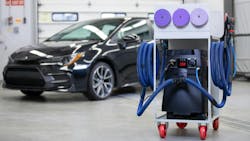
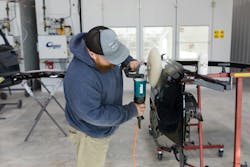
It's ideal to have a dedicated area for each stage of the prepping and painting process. Blocking primer and sanding cars should be done as far away from the booth as possible. This process helps to keep the jobs clean by cutting down on sanding dust that can sneak into the booth when the painter goes in and out, or during booth loading and unloading. A huge factor in keeping the area and paint jobs clean is using a sanding vacuum system. Not only does this help keep the car you're working on clean, but it also minimizes sanding dust from collecting on equipment, like your parts stands, which potentially track dust into the booth. More importantly, it’s better for the health and safety of the technician.

After it’s sanded and cleaned, it’s ready to move closer to the booth to a dedicated masking area. When setting up your masking area, you'll again need to make sure it's well-lit, organized, and always kept clean. Most paint shops now spray parts off the cars whenever possible: this means you'll need an assortment of part stands. All shops should have bumper stands, door and fender stands, and ideally at least a couple of stands for hoods. The best hood stands are hinged so you can open and shut the hood while on the stand. Being able to prop up the hood while in the booth is important so you don't miss tough-to-reach spots on the underside. You should also have a couple of magnetic holders for small parts like door handles, mirrors, and hinges. Ideally, shops should have a dedicated area to store stands when they’re not in use. Searching for stands that aren’t put back where they belong is just a waste of time.
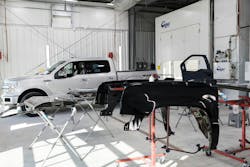
A great tip to further save you time and increase productivity is to measure the spraying area inside the booth. That way, when the vehicle you’ve just sprayed is baking, you can more easily stage the next booth load exactly how you want it to be laid out once it’s inside the booth. Doing this will minimize the downtime between booth loads.
Shops should also have a dedicated area to put freshly painted parts. If you have a drive-through booth, keep the parts on the exit side to cool down. Once cooled, any imperfections — like runs or clear blends in the jamb — can be addressed before the car goes to the detail bay for a final buff and clean.
It's best to set up your prep and paint area to minimize the moving of cars. A properly set-up paint shop will have every process staged in the order of operation so there is a smooth workflow. The last thing you need is a traffic jam in your paint area.
Keep a clean and organized mix room
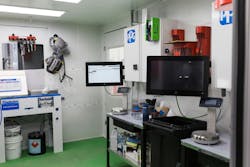
The mix room is another area that needs to stay organized and clean. A cluttered and dirty mix room can lead to inefficiencies. Every product in the mix room should have a specific spot. Otherwise, you may waste time finding what you need at a later stage, and it can be difficult to keep tabs on your backup supply. For accurate mixes, it is a necessity to keep your scale clean and calibrated and keep the pour spouts on your toners clean and free of buildup. Additionally, it is essential to keep an organized sprayout library, preferably in your mix room. There are many ways to organize your sprayouts, but a sprayout cabinet with pins to hang them is best. Organize them by putting the manufacturers in columns and color groups in rows. That makes it easy to look for sprayouts of similar colors in other manufacturers if necessary. Make sure to also keep your sprayouts of formulas that you’ve manually tinted, as long as you have recorded in detail the amounts of toners added or left out.
Plan for success with regular production meetings
Now that your paint and prep area is ready for an efficient day of work, you’ll have to make sure you know what’s coming over to the paint shop and how you’re going to organize the work. It’s best to have a daily morning meeting with body techs and office staff to know what to expect in the coming days. Make sure whoever is in charge of parts is involved as well, as this will help you know if you are waiting on parts that need to be painted. You should then make a booth schedule using a whiteboard with a detailed list of what’s going to be painted in each booth cycle for the day in order of importance. For example, if there’s a parts hiccup on the second planned booth cycle, skip over and spray the third booth cycle on the list. If the parts show up later in the day, go back to the second cycle before you proceed further down the list. It’s also a good idea to have a section of the booth schedule for loose parts like handles and mirrors. That way, if you have any extra room during a booth cycle you can grab a part or two and spray them as well.
Setting up a successful paint and prep area is all about being organized and clean while maintaining good communication between body techs, office staff, and the paint shop. Following these steps will assist in keeping vehicle repair work flowing smoothly through your shop.
About the Author
 Michael Nelson
Michael Nelson
Refinish Trainer
Michael Nelson is a refinish trainer at the 3M Skills Development Center. Michael has served the collision industry for 29 years. He previously held production painter and product specialist roles for Finishmaster and Axalta Coating Systems. He trains painters and preppers from across the country on all aspects of the collision repair process.