Preparing for the next wave of ADAS: Calibration, verification, and liability in collision repair
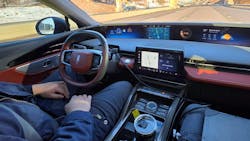
From hands-free highway driving to narrow “eyes-off” automation and expanding Level 4 autonomous vehicles (AV), the next wave of advanced driver assistance systems is less about one breakthrough sensor and more about tighter rules, more software control, and higher expectations after a loss.
Between 2026 and 2030, ADAS will not turn the average consumer vehicle into a robotaxi. More vehicles will show up with driver assistance turned on by default. More of those features will be controlled by software versions, mapped-road permissions, subscriptions, and strict enablement rules. And more customers will judge the repair by one test: “Does it behave the same as it did before?”
That shift is happening while the collision market is already tight. Frequency has softened in many pockets. Severity continues to climb. Insurers are pushing cycle time and line-by-line scrutiny. Regulators and automakers keep raising the safety bar. Meanwhile, consumers are buying vehicles where the tech package is part of the identity of the vehicles, especially on premium trims and EVs.
Which technology is changing?
You can boil 2026-2030 down to a handful of trends that will show up in the bay.
Sensor coverage grows around the vehicle
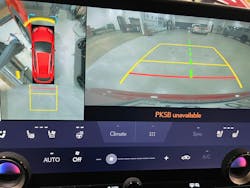
The next five years continue a steady expansion: more perimeter cameras, more corner radars, and more overlap between front, side, and rear sensing. The “coverage map” of the vehicle continues to fill in.
This matters because even minor impacts will potentially involve more sensors continuing the upward trajectory of repair complexity. The need to confirm sensor bracket positioning becomes more frequent, and repair tolerances become more exacting.

Vehicles are trending away from dozens of isolated little modules and toward fewer, more powerful controllers that fuse data from multiple sensors.
Computing centralizes, and systems fuse
Vehicles are trending away from dozens of isolated little modules and toward fewer, more powerful controllers that fuse data from multiple sensors. When that fusion works well, capability improves. When it does not, you can get a bigger failure footprint: one compromised network path, one water-intruded connector, one incorrect software state, and suddenly, multiple features are unavailable.
Driver monitoring becomes nonnegotiable
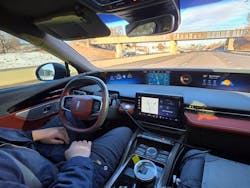
If a system offers hands-free driving, it must prove that the driver is engaged. If a system allows eyes-off in limited situations, it must alert the driver to retake control. Driver monitoring is now part of the safety case, not a convenience add-on.
This brings interior cameras, other in-cabin monitoring methods, and stricter attention thresholds into the repair conversation. In some cases, interior changes that used to be “cosmetic” could affect feature availability.
Maps, connectivity, and software version matter as much as hardware
A lot of modern ADAS behavior is conditional: supported roads, supported speeds, lane-marking quality, weather, sensor confidence, and software version. Over-the-air (OTA) updates and feature packaging mean two identical-appearing vehicles could behave differently over time. Even if the hardware is perfect, a feature may not be enabled if the vehicle is not operating under the right conditions or if the system is not in the right state.
From a customer standpoint, that nuance does not matter. If it does not work on their commute, they will assume the repair is the cause.
The future comeback is not a misaimed sensor; it is a feature that won’t enable.
Level 2 will remain the majority, and it will become software-managed
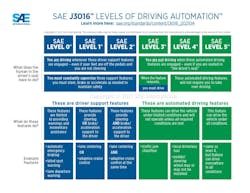
Level 2 is where most consumers will live through 2030. That is why Level 2 is the biggest operational driver for repairers: it is high-volume, and it touches everyday claims. Hands-free, eyes-on highway systems will move from premium trims to mainstream trims. The driver remains responsible for safe vehicle operation.
Tighter logic is a safety feature, but it will become a friction point after repair. Customers will notice if the car turns off assistance sooner than they remember. They may blame the repair even when the system is operating as designed.
Hands-free grows, and boundaries tighten
The next generation of hands-free highway driving is not about a dramatic leap. It is about refinement and rule-tightening:
- More supported road coverage (not in all regions).
- Smoother lane changes.
- Better handling of cut-ins and merges.
- More conservative “turn off” logic when system confidence drops.
- Stronger driver monitoring enforcement.
Tighter logic is a safety feature, but it will become a friction point after repair. Customers will notice if the car turns off assistance sooner than they remember. They may blame the repair even when the system is operating as designed.
Conditional behavior becomes the norm
Level 2 systems increasingly behave like “if-then” statements. If the road is supported, then hands-free is available. If lane markings are strong, then lane centering behaves confidently. If the camera view is clean, then the system stays active longer.
After a repair, this conditional nature creates gray areas. What the customer calls “intermittent” is often just conditional. Your process must separate:
- A true fault.
- An enablement condition.
- A calibration/aiming issue.
- A software version issue.
If these are not separated cleanly, the shop becomes the default scapegoat.
Level 2 takeaway
Level 2 is not just expanding. It is becoming software-managed and expectation-driven. Customers will notice enablement differences. Insurers will question operations they do not understand. The shop that can explain and document the process will spend less time defending — and more time collecting.
Pricing pressure will be real in this window. As more shops buy targets and carriers treat calibration like a checkbox, rates get squeezed. The counter move is not claiming ADAS is “high tech.” The counter move is to show that you deliver a verified outcome: correct fit, correct aim, correct enablement, and a documented validation trail.
ADAS is not becoming simpler. It is becoming more normal—and more scrutinized.
Level 3 is real, but it lives inside a rule-constrained box.
Level 3 gets headlines because it is “eyes-off,” but it is also the most misunderstood. It is not a general upgrade to Level 2. It is a different concept with a tighter ruleset. The vehicle takes on the dynamic task of driving, but only within a defined operating domain. Outside that domain, the driver is back on the hook.
This “box” creates a new kind of post-repair problem: a vehicle can be repaired correctly and not activate the features if conditions are incorrect, despite what the customer remembers.
Even when the hardware is perfect, systems can be picky if the correct conditions cannot be met. From a safety standpoint, that is the right call. From a customer standpoint, it feels like 'the car is broken.'
Redundancy and confidence drive complexity.
To support eyes-off operation in limited conditions, systems lean on:
- Overlapping sensor coverage.
- More robust diagnostics.
- Conservative confidence thresholds.
- Fallback strategies for braking/steering control.
- Driver monitoring and takeover logic.
Even when the hardware is perfect, systems can be picky if the correct conditions cannot be met. Any uncertainty — camera view, radar alignment, network communication, software version mismatch — could cause the vehicle to lock the feature out rather than risk operating on low confidence.
From a safety standpoint, that is the right call. From a customer standpoint, it feels like “the car is broken.”
The liability conversation changes.
Level 3 systems shift accountability in a way Level 2 does not. Even with a narrow envelope, the idea that the vehicle can take over the driving task changes how customers, attorneys, insurers, and regulators think about failure. That does not mean collision shops suddenly carry legal responsibility for automation. But it does mean the expectations for proof, documentation, and defensibility rise.
A clean repair story will not be optional. It will be the difference between a straightforward claim and a messy dispute.
Level 3 takeaway
Level 3 will expand in select models, but it will remain constrained by legal, mapping, and risk management realities. The bigger impact on the shop is not that every car becomes autonomous. It is that more vehicles will contain features that require a clean calibration and a clean validation story to restore confidence — and to protect you when the question becomes, “Who is responsible?”
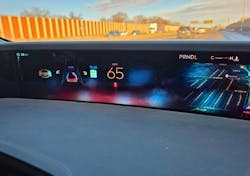
Level 4 AVs expand, and they still matter to collision repair.
Level 4 is where the vehicle drives without a human in the loop — inside a defined area and under strict conditions. Most collision shops will not repair true Level 4 vehicles routinely by 2030. But Level 4 still matters because it changes three things that do reach the consumer fleet: regulation, sensor packaging, and expectations.
Regulation: more reporting, more scrutiny, more “prove it”.
As higher automation grows, regulators want clearer reporting and accountability. That mindset tends to spill over into the consumer ADAS space. It pushes OEM procedures toward more explicit verification steps, and it makes documentation feel less like paperwork and more like protection.
If a claim ends in a dispute, the shop with a clean chain of documentation will have less exposure than the shop with a verbal story.
Sensor packaging: cost concentration and sensitivity to geometry.
AV fleets often use dense sensor coverage and high mounting points for better visibility and redundancy. Consumer vehicles may not adopt the same layout, but the design thinking leaks downstream:
- Better-protected sensor fields of view.
- Tighter mounting geometry expectations.
- More parts are concentrated into fewer assemblies.
When ADAS content consolidates, one damaged component can take out multiple features. That affects estimating, supplements, and the “why is this part so expensive?” conversation.
Over time, consumers treat ADAS as a reliability feature, not a convenience feature. When it is unavailable, they will assume something is wrong — even if the system is operating as designed.
Expectations: “It should handle the unexpected.”
Level 4 also shapes what consumers think cars “should” do. They do not separate a “geofenced fleet system” from “my personal vehicle.” They just absorb the direction of travel. Over time, they treat ADAS as a reliability feature, not a convenience feature. When it is unavailable, they will assume something is wrong — even if the system is operating as designed.
That expectation spills backward into Level 2 and Level 3 complaints. It raises the bar on how well shops need to explain capability and verification at delivery.
Level 4 takeaway
Level 4 will not flood U.S. collision shops with robotaxis by 2030. But it will tighten the culture around verification. It will influence how sensors get packaged and protected. And it will raise the baseline of consumer expectations — especially when every edge case becomes a viral story.
Reality checks: sensor stacks will not standardize, and some roadmaps will stall
Not every automation roadmap ships on schedule. That does not mean ADAS will not continue to evolve. It means the business case is real: cost, legal exposure, regulation, and demand all matter.
And do not expect one sensor suite to dominate through 2030. ADAS solutions will remain mixed: camera-heavy systems, radar-centric systems, and selective use of other sensors depending on platform, trim, region, and cost. Even within one brand, the same feature name can hide different hardware and calibration methods.
China’s influence is real but indirect for the U.S. market.
China is pushing ADAS adoption and cost-down at a speed suppliers cannot ignore. But Chinese makes are not currently a meaningful part of the U.S. new-car market, which limits immediate direct influence on what shows up in American repair bays.
The influence is indirect:
- Supplier scale can reduce component costs.
- Global OEMs can bring architectures and learnings back into U.S. platforms.
- Consumer expectations travel fast.
If a feature becomes cheap and common somewhere else, it tends to become expected everywhere—eventually.
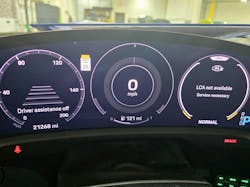
What this means for repair: the shop advantage is proof.
Over the next five years, the differentiator will not be whether you own targets. Plenty of shops will own targets. The differentiator will be whether you can run a clean, defensible, repeatable process under real-world time pressure.
Start with intake. A “before” snapshot is not just a scan. It is messages, complaints, feature availability, and what the customer says they use every day. If they talk about hands-free highway driving, capture that. If they mention a feature “not turning on,” capture the conditions they remember.
Build the repair plan with sensor geometry in mind. Mounts, brackets, and reference points are critical. If a procedure calls for a specific bumper-to-body gap, a bracket replacement, a prerequisite wheel alignment, or a one-time-use fastener, it is not optional — because the feature depends on it.
Calibrations are now routine work, which means the environment must be routine, too: Consistent bay setup. Verified floor. Controlled lighting when required. Target placement that is measured, not guessed. And when dynamic calibrations are required, treat them like a test procedure, not a quick lap around the block.
Validation is where many shops still get burned. A good validation note includes the conditions under which you tested: road type, weather, speed range, markings, and any system messages. It does not need to be a novel. It needs to be enough to defend your work when someone asks why a feature did not enable on a customer’s commute.
The cleanest shops will win the argument before it starts. Not because they talk louder, but because they can show what they did.
About the Author
 Paul Bostel
Paul Bostel
Director of Advanced Vehicle Technology
Paul Bostel is a seasoned leader with a rare blend of expertise in both advanced automotive technology and fire service operations. With over 20 years in the automotive industry, he is recognized as one of fewer than 2,300 ASE World Class-certified technicians — a distinction that underscores his mastery in diagnosing and repairing complex vehicle systems, with a specialized focus on ADAS. Paul is director of Advanced Vehicle Technology for Quality Collision Group, where he applies his analytical precision and strategic mindset to elevate operational performance and repair standards.
In parallel with his automotive career, Paul has proudly served the Apple Valley Fire Department for over nine years and holds the rank of captain, demonstrating his strong leadership, commitment to community service, and ability to manage high-pressure environments. His career is defined by innovation, efficiency, and a continuous drive to raise industry standards across every role he takes on.