This Month in BackBay by Collision ProAssist: Ford F-150 self-piercing rivets
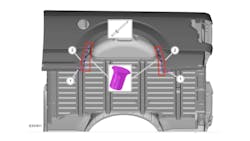

Welcome to the debut of "This Month in BackBay, by Collision ProAssist." Each month, I’ll feature a real-world inquiry we received in BackBay, our members-only collision repair technician support and education portal. Before we dive into the first question, I wanted to tell you a little about Collision ProAssist and BackBay.

I launched both late last spring to better support collision repair technicians. The men and women who repair collision-damaged vehicles are the cornerstone of our industry, yet I’ve long felt they’re the least supported group in the industry, and I am aiming to change that. BackBay provides technicians, including Spanish-speaking technicians (and other languages), with answers to their collision repair questions, allows direct interaction and education with OEMs and tool, equipment, and product makers, and offers other resources for outside of the shop, including financial resources and physical and mental health support. If you want to learn more, email me at [email protected] or click here.
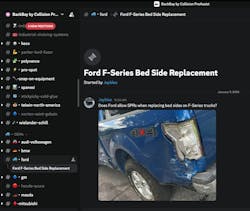
For the first article, we turn to the most frequent question I’ve gotten over the past 10+ years; I also see this question asked frequently on social media platforms:
“Does Ford allow self-piercing rivets (SPRs) to be used for outer box side replacement on the F-150?”
(Figure 1) Historically, the answer had been “no,” but there have been multiple iterations of the procedure, so it’s not quite that simple. The only way to properly answer that question is to look up the current procedure for the model you’re working on.
Let’s cover how to determine if the model you’re working on allows SPRs, or if blind rivets (or welding) are required. The key to knowing when SPRs can (and can’t) be used is found in the part number "boxes" that are embedded in the procedure. Note: the following also applies to other procedures on F-150, other F-Series trucks, and aluminum Expeditions and Navigators.
If there is a part number for SPRs listed in the box for a particular step, then self-piercing rivets are allowed. If there is NOT a part number listed (if the box under SPR number/code is empty), self-piercing rivets are NOT allowed. It’s really that straightforward.
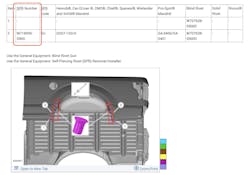
In Figure 2, you can see that this procedure lists a part number for SPRs. In this instance, self-piercing rivets would be allowed.
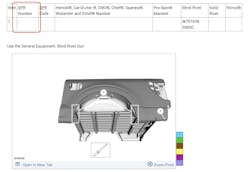
In Figure 3, there is not a part number listed in the SPR column. Therefore, only the blind rivets (or welding) called for would be allowed.
The next time an aluminum F-150 with a damaged bed side comes into your facility, don’t make any assumptions about which attachment method should be used for replacement. Access the procedure for that model and refer to the outer bed side replacement procedure; it’s the only way to ensure you’re using the proper rivets. I hope to see you in BackBay soon.
About the Author
 Jason Bartanen
Jason Bartanen
Founder and Chief Technician Advocate
Jason Bartanen is the founder and chief technician advocate of Collision ProAssist, where he guides technicians through technical support and tailored education. He has been in the collision repair industry for nearly 30 years, including more than 23 years serving in various roles for I-CAR, the Inter-Industry Conference on Auto Collision Repair. He was most recently the director of industry relations at Collision Hub for nearly six years.