The importance of OEM procedures and technician skills
Key Highlights
- Modern vehicles use mixed materials like high-strength steel, aluminum, and composites, requiring diverse attachment methods.
- OEM repair procedures are essential blueprints that specify correct attachment techniques, order of operations, and safety measures.
- Technicians must interpret OEM instructions accurately and adapt to real-world conditions without compromising quality or safety.
- Proper training, such as the I-CAR MAM course, enhances technicians' ability to perform complex repairs confidently and correctly.
- Aligning OEM procedures with skilled execution results in complete, safe, and high-quality repairs that protect vehicle performance and customer trust.
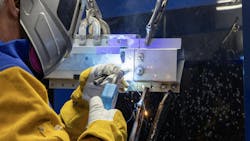
As someone who has spent years in collision repair, I can tell you this: today’s vehicles are a different world compared to what many of us grew up working on. The days when you could “eyeball” a repair or rely on memory are gone. Modern vehicle construction, mixed materials, and advanced attachment methods have raised the bar. And if we don’t rise with it, the repair — and ultimately the consumer — suffers.
That’s why courses like I-CAR’s Mixed Attachment Methods (MAM) are essential. It’s not just about training; it’s about giving technicians the tools to match the complexity of the vehicles they see every day.
The realities of modern vehicle construction
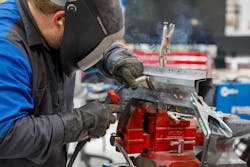
It’s immediately apparent on the floor that OEMs are blending materials in ways that challenge everything we know about joining and repairing. High-strength steels, aluminum, and composites often sit side by side in the same structure. Each reacts differently to heat and stress, which means you can’t treat them all the same.
Take attachment methods. It’s not unusual for a single repair to require more than one approach. Some examples include:
- Squeeze-type resistance spot welding (STRSW)
- Gas metal arc (GMA) Welding
- MIG brazing
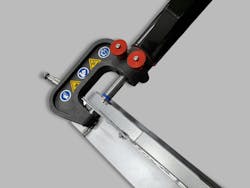
- Rivet bonding
You can’t choose based on personal preference or convenience. The OEM already made that decision during design. Using the wrong method risks not just the repair but also the safety of the people in that vehicle.
OEM repair procedures: Why they matter
I’ve heard technicians say, “I’ve been doing this for years; I know how to fix it.” I respect experience, but the truth is, no amount of time in the trade replaces the knowledge and direction the OEM provides.
OEM repair procedures are the blueprints. They spell out:
- Which attachment methods go in which position.
- The order of operations.
- How to manage materials, heat, and corrosion protection, etc.
When OEM repair procedures are followed, we know we are repairing the vehicle exactly as the manufacturer intended. When we don’t — or if we assume — we open the door to mistakes. A misplaced weld, a skipped bonding step, or incorrect heat control can all weaken the structure. And in this line of work, “weakened” more often than not means unsafe.
That’s why one of the biggest takeaways from the MAM course is not just how to perform these attachment methods, but how to locate, read, and understand OEM procedures. It’s a skill in itself, and it’s every bit as important as holding a torch and performing a quality weld.
Technician skills: Where knowledge meets execution
Now, OEM procedures give us the what. But it’s technician skills in the shop that deliver the how.
We’ve all seen procedures that look straightforward on paper become tricky in practice. Access might be limited, materials might not behave exactly as expected, or shop conditions might make the process tougher. That’s where training pays off.
A skilled technician needs to:
- Interpret OEM instructions and adapt them to real-world conditions without cutting corners.
- Execute advanced attachment methods with precision and repeatability.
- Recognize limits — sometimes the repair calls for equipment the shop doesn’t have, or a method that requires referral.
The MAM course reinforces this. It’s not just theory — it’s about building confidence to handle complex repairs correctly, every time.
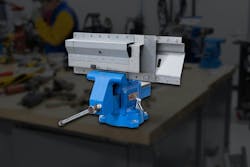
What happens when skills and procedures work together
When OEM procedures and technician skills line up, the results speak for themselves:
- Complete repairs. Nothing is missed; nothing is improvised. Every step meets OEM expectations.
- Safe repairs. Crash management systems perform as designed because the vehicle is restored to OEM standards.
- High-quality repairs. Customers trust the outcome, and the vehicle’s long-term performance is protected.
I’ve also seen the flip side — repairs done without adhering to OEM repair requirements or the proper training. They might look fine leaving the shop, but under stress — in a collision — the weaknesses appear. That’s not a risk any of us should take.
Moving the industry forward
Collision repair has always been about skill, but today, it’s also about knowledge. You can’t have one without the other. As vehicles evolve, so must our industry.
The I-CAR Mixed Attachment Methods course stands out because it doesn’t treat OEM procedures and technician skills as separate. It ties them together, showing how each relies on the other to deliver a complete, safe, and quality repair for the ultimate benefit of the consumer.
At the end of the day, what matters most is not just getting a vehicle back on the road but knowing it’s ready for the road, having followed OEM repair procedures and requirements, and performing quality repairs that meet OEM repair standards.
About the Author
 Bud Center
Bud Center
Director of Technical Products and Curriculum at I-CAR
Bud Center is the director of technical products and curriculum at I-CAR, where he leads the development and delivery of educational programs for the collision repair industry. With nearly 40 years of experience, Bud has a diverse background in technical training and automotive repair leadership. His role involves overseeing curriculum strategy, technical content creation, and program innovation to ensure that I-CAR's training remains cutting-edge and relevant to the evolving needs of the industry. Bud is also a member of various committees and actively participates in industry events to share insights and promote lifelong learning in collision repair.